
What Makes a Great Expedition Leader?

Last Updated on March 21, 2026 by Amylee Silva
The Difference Between a Guide and a Scholar in the Field
The world does not lack for tour guides and tour leaders. Every continent, every city, every national park has someone willing to hold up a numbered sign and usher a group from point A to point B. What is extraordinarily rare and what Miru Adventures is built around, is something else entirely: the expedition leader who is simultaneously a working scientist, a gifted communicator, a logistician in remote terrain, and a person whose enthusiasm for the natural and cultural world has never once dimmed.
This distinction matters more than it might first appear. When you are two days from the nearest town in northern Pakistan, watching a snow leopard traverse a ridge at dawn, the difference between a guide who can say “that’s a snow leopard” and one who can explain the territorial pressure driving that animal’s path, the prey dynamics of the Karakoram, and why this particular valley has supported apex predators for ten thousand years, that’s difference between a sighting and an understanding.
Great expedition leaders don’t translate the world for you. They give you the tools to read it yourself.
At Miru, we use the word “leader” deliberately. These are not narrators following a script. They are scholars who have chosen the field over the classroom and who bring the intellectual rigour of both. You can meet all of them on our field leaders page.
The Guide Problem: Why Most Travel Doesn’t Teach
Mass travel has perfected the art of proximity without depth. You can stand at the rim of the Ngorongoro Crater, be told it is a caldera formed roughly two and a half million years ago, and leave knowing precisely that single fact. You have been near something extraordinary. You have not been inside it.
The conventional guide model is built around information delivery, facts attached to places, names attached to species, and dates attached to ruins. This is not without value, but it is a fundamentally different experience from what happens when a true field scholar leads an expedition.
The scholar-leader doesn’t only tell you what something is. They tell you why it exists, how it fits into a larger system, what threatens it, what is being done to protect it, and why any of it should matter to a person standing here, now, in the year 2026.
The result, for the traveller, is not just knowledge. It is a changed relationship with the world.
The Five Qualities That Define an Exceptional Expedition Leader
1. Deep, Peer-Level Expertise in Their Discipline
The leaders who transform expeditions are, without exception, recognised authorities in their fields. Not enthusiasts but authorities. They have published, researched, or practised at a level that places them among peers worldwide.
When a conservation biologist leads a wildlife expedition, they’re reading the ecosystem the way a musician reads a score. The IUCN estimates that human activity has altered three-quarters of the Earth’s land surface. A leader who understands that pressure, not just in abstract, but in the specific ecology they’re standing in, changes what their travellers are able to see.
Dr. Mark Brazil — Conservation Biologist & Wildlife Author
A regular leader of small land-based wildlife expeditions across Africa, South America, South Asia, and East Asia, Mark is also a published author and regular lecturer on expedition vessels. He has ranged from the Arctic to Antarctica in pursuit of the natural world and brings to every expedition the perspective of someone who has spent a lifetime studying it.
2. The Ability to Translate Without Simplifying
There is a particular skill that separates great field leaders from good ones: the capacity to make complex ideas completely accessible without making them trivial. This is, in practice, one of the hardest things a person can do. It requires holding two things simultaneously: deep knowledge and genuine empathy for the person who doesn’t yet have it.
The best expedition leaders have developed what might be called a “calibrated vocabulary.” They can explain the evolutionary pressures behind bird-of-paradise display behaviour to a retired surgeon with no background in ornithology, and make that explanation feel like a gift rather than a lecture. They read the group. They adjust. They find the angle that opens the door.
Dr. Shirley Campbell — Social Anthropologist
With three decades of field experience across remote villages of Southeast Asia and the Pacific, Dr. Campbell brings an anthropologist’s eye to cultural interpretation, looking not just at what people do, but at what it reveals about how they understand the world. Her conviction that art is a window into a culture’s deepest values has shaped an approach to expedition leadership that goes far beyond surface-level cultural tourism.
3. Comfort With Uncertainty — and the Honesty to Admit It
A guide who has a confident answer for every question may be impressive in the short term. An expedition leader who says “Let’s think through what the evidence suggests,” is far more valuable. The willingness to sit with uncertainty, to model good scientific reasoning in real time, and to be honest about the limits of current knowledge is one of the most important qualities in a field leader.
This matters especially in natural history, where the world persistently refuses to behave according to field guides. Animals are not where they should be. Weather systems override the itinerary. A species believed to be common turns out to be absent from an entire valley. The leader who treats these moments as failures has a different expedition than the one who treats them as the most interesting data points of the day.
4. A Sustained, Visible Enthusiasm That Has Not Been Managed Into Performance
There is no substitute for genuine passion, and travellers can detect its absence immediately. The expedition leaders who create the most transformative experiences are people whose enthusiasm for the natural and cultural world is not a professional posture; it is simply who they are, expressed in the context of their work.
“When I began this career, I was a shy kid with nothing but a pair of binoculars and an enthusiasm for birds, plants, and animals. What a difference a lifetime makes.” — Lex Hes
Lex Hes — Safari Expert & Photographer
Lex began his career at the then-unknown Sabi Sand Game Reserve, notebook and binoculars in hand, recording everything he encountered. He has since worked as a wildlife cameraman for documentaries, become a renowned photographer of leopards, co-owned the world’s largest safari guide-training business, and led expeditions across southern Africa. His long career in guiding has not dimmed his enthusiasm by a single degree — and that enthusiasm is precisely what makes being in the field with him so extraordinary.
5. Cross-Disciplinary Thinking
The natural world and the human world are not separate. The greatest expedition leaders understand this instinctively. A safari guide who can also read the geology that shaped the savanna, the history that determined which species survived colonial-era hunting pressure, and the economics that currently govern conservation outcomes is not four people, they are one person with a more complete picture.
This integration is rare. It takes years of broad reading, genuine curiosity beyond one’s primary discipline, and the intellectual humility to recognise that every field illuminates every other.
Travellers who spend time with leaders who think this way often describe their expeditions not as trips, but as a shift in how they see the world.
Gary Wintz — World Traveller & Cultural Interpreter
Gary graduated cum laude in philosophy and has spent most of the past four decades outside the United States researching, writing, photographing, and lecturing across more than 220 countries and territories. His background in philosophy is not incidental to his work as a field leader. It shapes how he approaches cultural interpretation, finding in each society the deeper questions of meaning, identity, and human organisation that connect it to every other.
When Expertise Shapes the Itinerary
The qualities described above are not conceptual virtues. They have direct and visible consequences in how a Miru expedition is designed and what’s possible to experience on one.
The itinerary is built around the leader’s expertise. Browse the expedition calendar and the pattern is immediately visible: each departure is shaped around a specific leader’s discipline. The difference, in practice, is considerable.
Here’s what that looks like across five expeditions currently in the Miru calendar.
Ecuador: Andes & Amazon Hummingbirds — with Dr. Mark Brazil
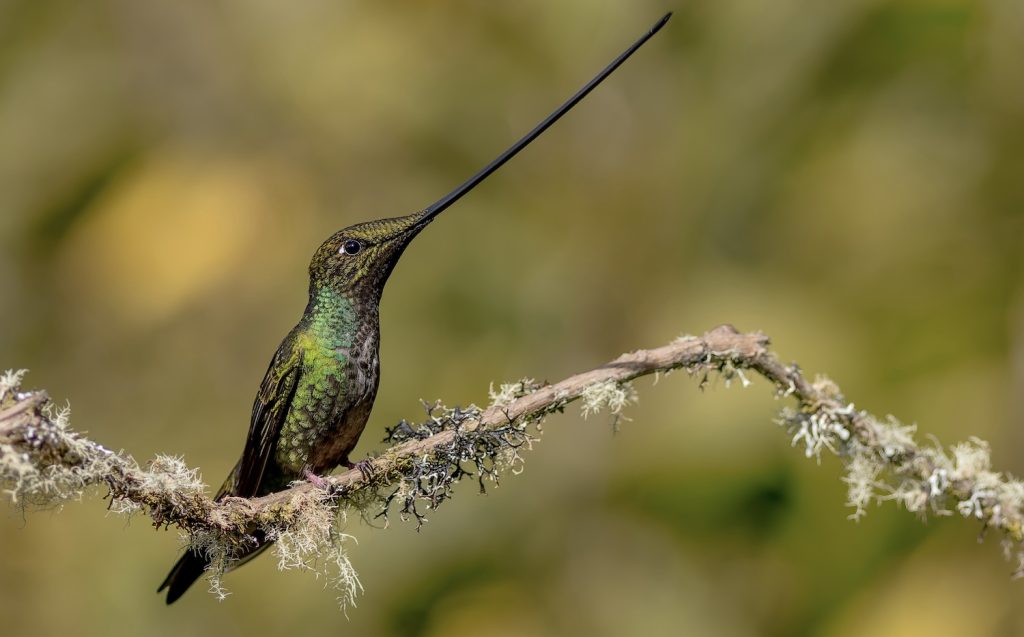
Ecuador hosts approximately 135 hummingbird species, nearly 40 percent of all species in the Americas all within a remarkably compact geographic area. That density exists because of dramatic altitudinal shifts: distinct bird communities form at each elevation band as you move from high páramo through cloud forest and down into the Amazonian foothills. National Geographic has described Ecuador as among the most biologically rich countries on Earth, and the numbers bear it out. A standard Ecuador tour might take you through beautiful landscapes and call it birding. This expedition is structured around that ecological fact.
The three lodges, Guaycapi in the northwest Andean cloud forest, San Isidro on the eastern Andean slopes, and Wildsumaco deep in the Amazonian foothills, are not chosen for comfort alone, though the comfort is excellent.
They are placed to give access to three distinct altitudinal communities, each with its own species assemblage. Mark Brazil’s ornithological background is the reason the itinerary reads as it does: every transfer is a transition between ecosystems, and every stop is calibrated to what is actually present and why.
“Hummingbirds are a highlight of this journey, but they are only part of the story. As we travel from high páramo through cloud forest to the Amazonian foothills, entire bird communities shift with elevation, revealing Ecuador’s extraordinary diversity.” — Mark Brazil

Across the Caucasus: Azerbaijan, Georgia & Armenia — with Gary Wintz
The Caucasus is one of the most historically layered regions on Earth. A crossroads between the Black Sea and the Caspian Sea where Russian, Iranian, Turkish, and Central Asian influences have been absorbed and transformed over centuries into something entirely distinctive.
Most tours present this as scenery with history attached. Gary Wintz, with his background and four decades of research, structures the Caucasus expedition around a different question: how do civilisations at a crossroads develop identity?
That framing explains the itinerary’s specific choices. The UNESCO-listed Old City of Baku with its 15th-century Shirvanshah Palace and Maiden Tower; the 4WD ascent to the Sameba Church on its dramatic Kazbek ridge; lavash-making with a family in Garni Village. These are not highlights chosen because they photograph well. They are chosen because each one illuminates a different layer of how three neighbouring nations, shaped by the same geographical pressures and very different religious and political histories, have arrived at their contemporary identities. The polyphonic song and dance Gary mentions in his own words about the trip is evidence to this.
Sri Lanka: A Tapestry of Heritage, Culture & Nature — with Dr. Shirley Campbell
Sri Lanka has eight UNESCO World Heritage Sites. This itinerary visits seven of them. Dr. Campbell’s anthropological training means she can read these sites not as isolated monuments but as chapters in a single long argument about how a society builds, loses, rebuilds, and remembers itself.
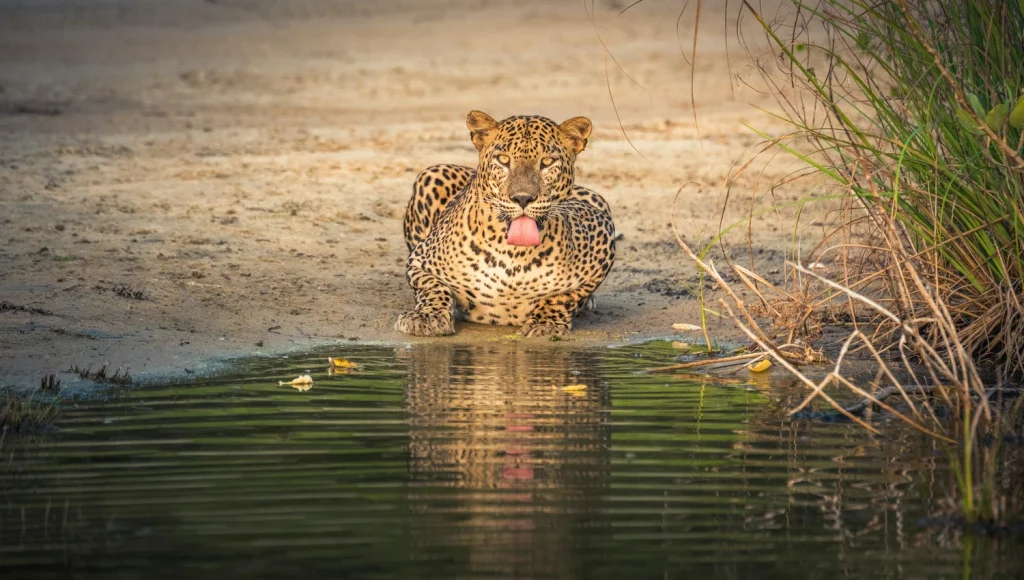
The natural history dimension is equally present. Safaris in Wilpattu National Park for the elusive Sri Lankan leopard and sloth bear, hiking through the montane landscapes of Horton Plains. But even here, the framing is characteristic: Sri Lanka’s biodiversity is understood in relation to its island geography, its agricultural history, and the conservation pressures it faces today. Nothing sits in isolation.
Indonesia & Wakatobi— with Sam Riley and Jon Dorsey
This is one of the few Miru expeditions led by two field leaders simultaneously. Sam Riley’s background as an award-winning naturalist and filmmaker gives him the breadth to contextualise Indonesia’s extraordinary ecological diversity, the Coral Triangle, Komodo National Park, and the cultural landscapes of Bali and Flores.
Jon Dorsey’s marine biology degree from the University of Miami and his career in eco-tourism development give him the depth to make the underwater experience genuinely scientific rather than merely spectacular. Jon’s observation is that Wakatobi is one of the few places where reef systems are still functioning the way they are meant to.
Wakatobi Resort’s exclusive positioning, with no other dive operators within 100 miles, is no tiny detail, it’s what makes the expedition’s ecological integrity possible. The leader’s knowledge is the reason the guest understands why it matters. See the full Indonesia & Wakatobi expedition for details.
What This Means for the Traveller
If you have ever returned from a trip with a collection of photographs but an uncertain sense of what you actually learned — this is the gap that a true expedition leader fills. The photographs are still there. But they are accompanied by context, by understanding, by a framework for thinking about what you saw that lasts far longer than the images themselves.
Miru expeditions are designed around the premise that the leader is not a service provider, they are an intellectual companion. The small group sizes (typically eight to fourteen travellers) are the structure that makes real conversation possible. They allow the leader to actually know who is in the group, what each person is most curious about, and how to shape the experience accordingly.
This is a fundamentally different model from guided tourism, and it produces a fundamentally different result. The people who travel with Miru are not looking for a curated highlight reel. They are looking for the understanding of a place, a species, a culture, an ecosystem. The leaders make that possible.
Meet the Leaders
Every Miru expedition is led by someone who has spent their career in the field. Their backgrounds span conservation biology, social anthropology, marine science, wildlife photography, philosophy, and natural history. Browse the full leader roster or explore upcoming departures on the expedition calendar.
The right leader for you is not the one with the most impressive CV; it’s the one whose particular area of expertise aligns with what you most want to understand about the world.
