How Specialty Tour Groups Are Redefining What a Trip Can Be

Last Updated on March 21, 2026 by Amylee Silva
Here’s what most people picture when they hear the words “guided tours”: a coach idling outside a hotel at seven in the morning, a laminated itinerary, forty strangers orbiting the same landmark for twelve minutes each. The image is so persistent and so deserved that it has quietly poisoned the concept of group travel for an entire generation of serious travellers.
It is also, at this point, significantly out of date.
Something has shifted in how a certain kind of traveller thinks about what a trip is for. Not what destination to visit, or which properties to stay in, but what the experience itself is meant to produce. What you are supposed to come home knowing, feeling, or understanding that you didn’t before. And in response to that shift, a different model of group travel has emerged: one built not just around logistics and landmarks, but around shared expertise, shared curiosity, and the particular alchemy that happens when a small group of people who care deeply about the same things encounter the world together.
The question is no longer where you go. It’s who you go with and what you’re trying to understand when you get there.
What Actually Makes a Specialty Group Different
The word “specialty” gets used loosely in travel marketing. It is worth being precise about what it actually means when the model is working well, because the difference between a genuine specialty expedition and a standard tour with a niche label is considerable.
The group is selected, not assembled
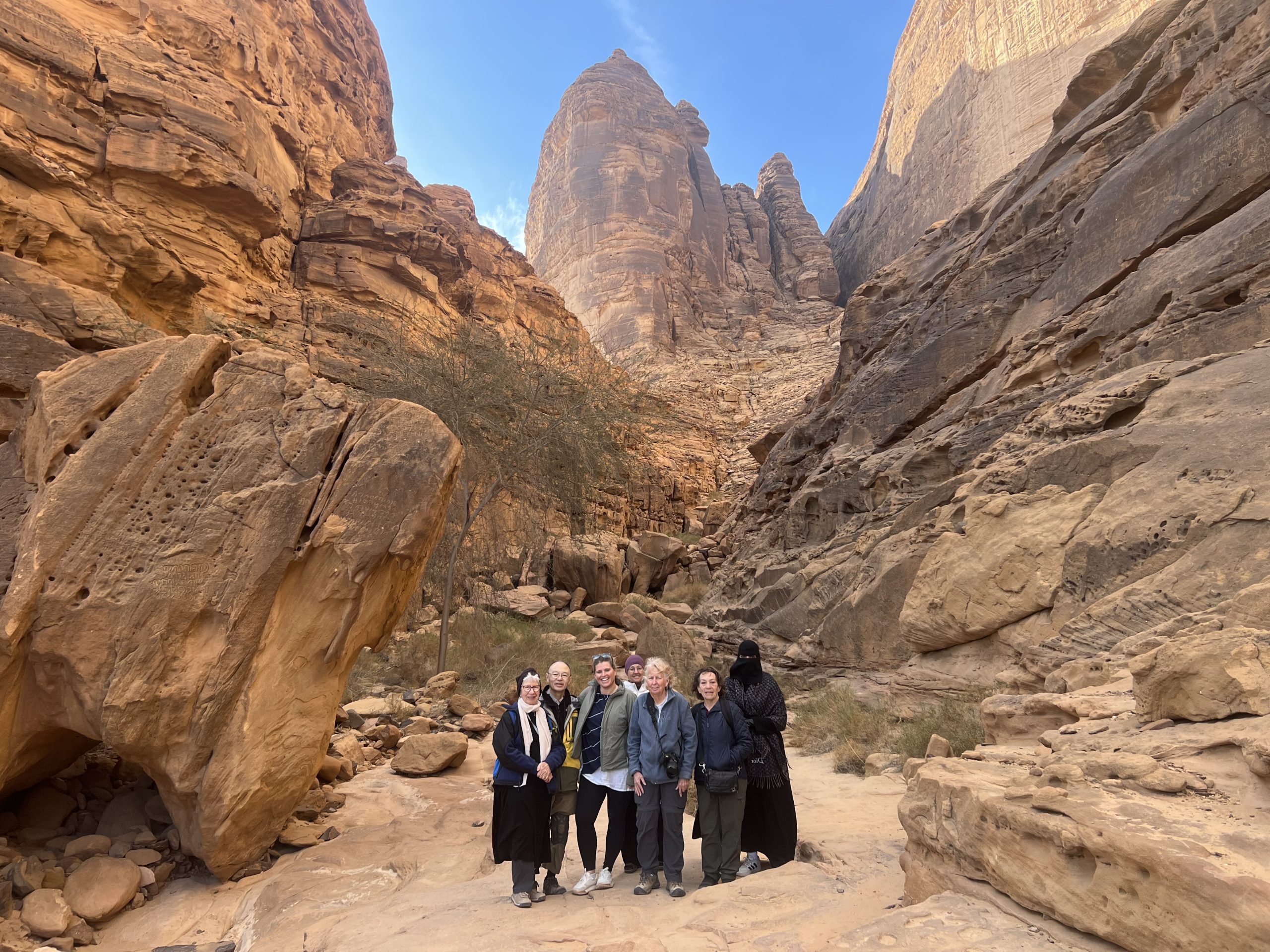
On standard small group tours, the group is whoever booked. On a genuine specialty expedition, the group has self-selected around a shared interest — a passion for birding, for reef ecology, for anthropological fieldwork, for high-altitude trekking — and that shared starting point changes everything about the social dynamic from day one.
Research published in the Journal of Travel Research found that travellers sharing common interests within a group setting are significantly more likely to form bonds with unfamiliar companions, because peer group members arrive with aligned values and curiosity rather than simply a shared itinerary. You don’t have to spend the first three days figuring out whether anyone else cares about the same things you do. You already know they do.
This matters more than it might initially seem. The conversations that happen around the dinner table on a specialty expedition between a marine biologist and a retired cardiologist who both just watched a manta ray feed at dusk, are not the conversations that happen on a standard tour. They are additive. Each person’s perspective sharpens and extends everyone else’s. Your fellow travelers become, in a real sense, part of the experience itself.
The leader is a scholar, not a narrator
Standard tour guides deliver information. Specialty expedition leaders operate differently. They are working experts who have spent careers in the field, and who bring to the expedition not just knowledge but a framework for thinking about what you’re encountering.
The distinction is most visible in the unexpected moments. When something unexpected happens, a rare species appears off-schedule, a local elder shares an account that contradicts the received historical narrative, a coral formation shows signs of stress that weren’t present a year ago, the specialist leader doesn’t reach for a script. They engage with it as the trained scientist, anthropologist, or naturalist they are. And in doing so, they model a quality of attention that the whole group begins to adopt.
The best expedition operators build their itineraries around their leaders’ specific expertise rather than assigning leaders to existing itineraries. Miru Adventures, for example, structures each departure explicitly around the field leader’s discipline so an ornithologist’s Ecuador expedition is designed around altitudinal ecology, while a social anthropologist’s Morocco journey is curated around material culture and the transmission of identity across generations. The leader’s knowledge is not a feature of the trip. It is the architecture of it.
Small groups are not a constraint — they are the mechanism
Most specialty expeditions cap group sizes at between eight and fourteen travellers. That average group size, a fraction of what most commercial tours run, is not a selling point. It’s a structural requirement. This is sometimes presented as a luxury feature, but the more important reason is functional: small groups are what make the specialty model possible.
A group of twelve people can deviate from the itinerary when something extraordinary presents itself. They can have a single ongoing conversation across multiple days, building on what was said the night before. The leader can know each person well enough to calibrate explanations, answer the questions people haven’t thought to ask yet, and read when the group needs to slow down and sit with something rather than move on.
At forty people, none of this is possible. The logistics become the expedition. At twelve, the expedition can be the expedition.
The Psychology of Travelling With People Who Care About the Same Things
There is a body of research on what happens, neurologically and socially, when people undergo intense shared experiences together. The sociologist Émile Durkheim identified it over a century ago as “collective effervescence” — a state of heightened shared emotion that emerges when a group’s attention and behaviour synchronise around a common focus. More recent science has put measurable detail on the mechanism.
A 2024 study published in Royal Society Open Science found that intense shared experiences, indexed by physiological arousal, were directly associated with the emergence of prosocial attitudes within groups, and that this effect depended on joint attention: people paying attention to the same thing at the same time.
Research published in Communications Biology found that people sharing experiences exhibit temporal synchrony in both facial expressions and physiological activity, producing measurable social connection.
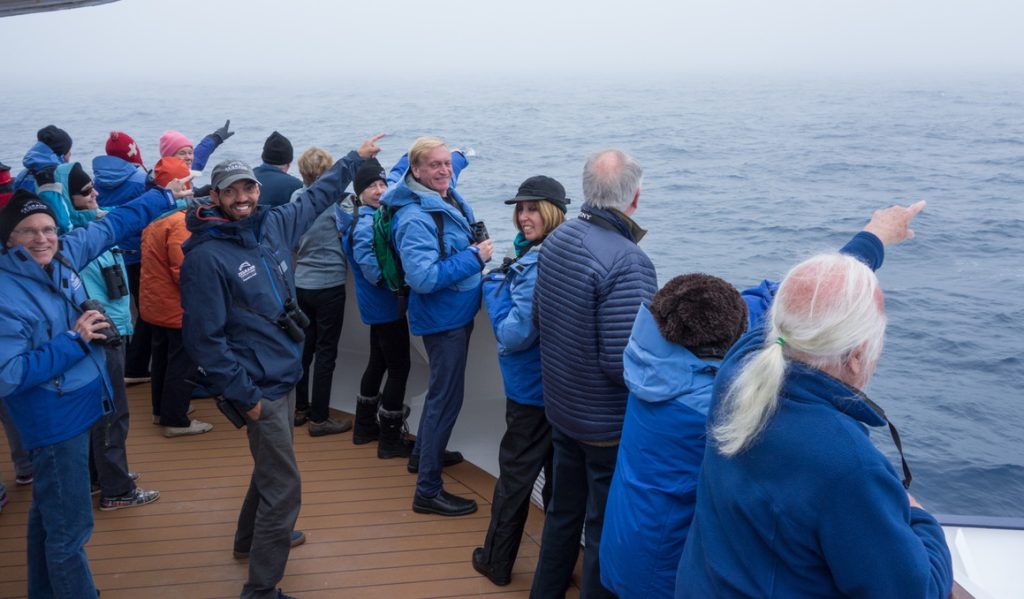
In practical terms, what this means for a specialty expedition is significant. When twelve people with a shared passion for marine ecology are floating above a functioning reef system for the first time — all paying attention to the same thing, all experiencing something outside their ordinary range — the social bonds that form are not incidental to the trip. They are a direct product of its intensity and focus.
The shared language of a common passion means that strangers with the same travel style become, within days, people who understand each other in a specific and unusual way.
Birders understand this instinctively. So do serious hikers, divers, cyclists, sailors. The people who pursue these interests have already self-sorted into communities defined by a particular quality of attention. A specialty expedition concentrates that community for a defined period of time and gives it a world-class field scholar as an interlocutor. The result is something that participants describe not as a holiday but as a before and after. The world doesn’t change, but the person who returns is not the same person who left.

Four Niches Where the Specialty Model Excels
Birding and Wildlife Expeditions
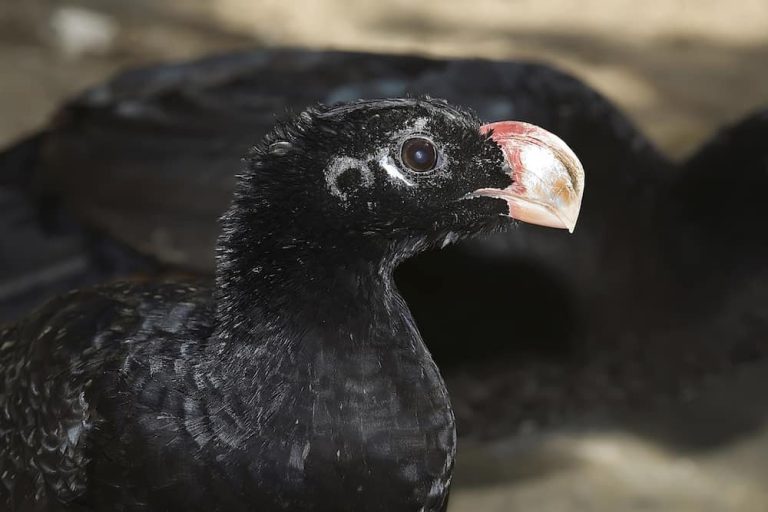
Wildlife travel has always had a specialist dimension, but the serious birding and wildlife-watching market has matured into one of the most intellectually demanding forms of travel available.
At its best, with a leader who is a published conservation biologist rather than a general naturalist, a birding expedition becomes an education in ecology, biogeography, and the pressures facing specific species and habitats. The distinction between seeing a bird and understanding why it is in this valley, at this altitude, at this season, and in what numbers compared to five years ago is the difference between a list and a comprehension.
Marine and Underwater Travel
The Coral Triangle, the region spanning the waters of Indonesia, Malaysia, the Philippines, Papua New Guinea, the Solomon Islands, and Timor-Leste, contains roughly 76 percent of all known coral species and over 2,000 species of reef fish. It is also under significant and accelerating pressure from climate change, ocean acidification, and overfishing.
A marine biologist who leads expeditions here offers a real-time account of one of the most biodiverse ecosystems on the planet while giving their group the conceptual tools to understand what they’re seeing at a level that transforms the experience from aesthetic to scientific.
Cultural and Anthropological Travel
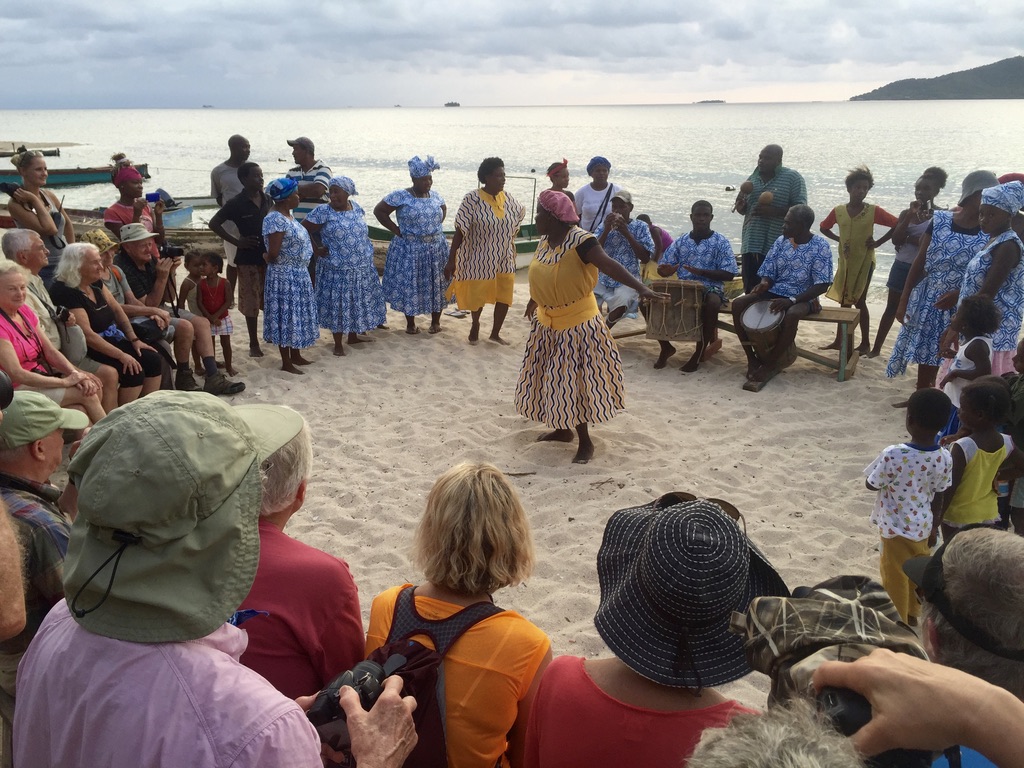
Destinations like Morocco, Sri Lanka, the Caucasus, and Papua New Guinea attract travellers who sense that there is more to understand than the standard itinerary offers. The question is whether the person leading the experience has the disciplinary training to unlock it. A social anthropologist who has spent decades studying how societies transmit identity through art, architecture, ritual, and material culture brings a fundamentally different lens to a medina or a highland village than a guide whose expertise is logistical. The physical experience may be identical. What you come home understanding is not.
Adventure and Expedition Travel
At the serious end of adventure travel, high-altitude trekking, remote wilderness expeditions, polar journeys, the leader’s expertise is not merely intellectual but existential. You need to trust the person’s judgment absolutely. But the best expedition leaders in this space combine that practical authority with deep natural history knowledge, so that the physical challenge is embedded in an intellectual one: the landscape becomes legible rather than simply arduous. The adventure tourism market is projected to nearly double in value by 2034, driven in large part by demand for experiences that are simultaneously physically demanding and educationally substantive.
What This Means If You’re Considering Specialty Group Travel
The practical implication of everything described above is fairly simple: if you’re the kind of traveller who has ever returned from a trip feeling that you saw a great deal but understood less than you wanted to, the specialty group model is worth serious consideration. This is especially true for solo travelers, who often find that a well-matched specialty group offers both the depth they’re after and the social dimension that independent travel can’t provide.
The things to look for are not primarily about the destination or the accommodation, though both matter. They are about the leader’s actual disciplinary credentials, the group size, and whether the itinerary was designed around the leader’s expertise or merely assigned to them. These are the structural features that determine whether a specialty expedition delivers what it promises.
The broader travel market is moving in this direction, but it is moving unevenly. The operators who have built genuine specialist programmes, where the leader is the intellectual architecture of the trip, where the group is small enough for real conversation, and where the itinerary is a direct expression of a field expert’s knowledge, remain a small subset of the industry. They are worth finding. You can see one approach to this model in how Miru Adventures structures its expedition calendar: each departure is explicitly shaped by a specific leader’s field expertise, from conservation biology and marine science to social anthropology and cultural interpretation.
The group tour is not a dead format. It has simply evolved into something that, at its best, a serious traveller would be lucky to be part of.
The right group changes everything. Bring yours— orjoin one of ours.
The Numbers Behind the Shift
The broader data is unambiguous. The global adventure tourism market was valued at nearly $900 billion in 2025 and is projected to nearly double by 2034, growing at a compound annual rate of almost nine percent. The luxury travel segment tells a similar story: valued at $1.59 trillion in 2025, it is expected to reach $3 trillion by 2033. These are not niche numbers. They describe a mainstream reorientation of what affluent travellers want.
What is driving it goes deeper than economics. Research published in February 2026 points to a fundamental shift in consumer values where experiences now demonstrably outweigh material possessions as drivers of spending decisions. An Accor study of 4,300 travellers across nine countries found that travel is increasingly defined not by geography but by how it makes people feel — with 25 percent of respondents saying they would prefer to begin their travel search with a “mood” rather than a destination. The era of “I want to go to Morocco” is giving way to “I want to learn something new.”
This is precisely the territory that specialty tour groups inhabit. They’re not selling destinations; they are selling depth. The demand for immersive experiences, ones that produce genuine understanding rather than a highlights reel, is precisely what this segment of the market has been built to meet. A particular quality of attention and understanding that mass tourism, by design, cannot offer.