Bird Watching Papua New Guinea: Where Evolution Unfolds in Real Time

Last Updated on January 13, 2026 by Amylee Silva
When Alfred Russel Wallace emerged from eight years in the Malay Archipelago in 1862, he carried with him 125,660 specimens and a revolutionary understanding of how species evolve in isolation. Among his most prized discoveries were live birds of paradise—complete with their feet intact, contradicting centuries of European folklore that these creatures floated perpetually in the heavens.
Today, Papua New Guinea Island remains what Wallace glimpsed: a laboratory of evolution where approximately 780-800 bird species, including around 38 of the world’s 43-45 birds of paradise, continue to astonish ornithologists and serious birders willing to venture into one of Earth’s last truly wild places.
For those who understand that the greatest wildlife encounters require commitment, Papua New Guinea represents the apex of avian observation. This is not casual birdwatching. It is, as experienced birders readily acknowledge, “the toughest birding you’ll ever do”—and precisely for that reason, among the most rewarding.

ID 263546115 @ Wirestock | Dreamstime.com
The Evolutionary Theater: Why Papua New Guinea’s Avifauna Is Exceptional
Papua New Guinea’s extraordinary bird diversity stems from a unique confluence of geological history, ecological complexity, and geographical isolation. Periodic land connections to Australia during ice ages, followed by rapid mountain uplift in the late Miocene, created a rugged landscape of isolated habitats where species evolved along distinct trajectories. Peaks rising over 13,100 feet (2.5 miles above sea level or 4,000 meters) now divide forests into stacked ecological zones, driving exceptional speciation over short distances.
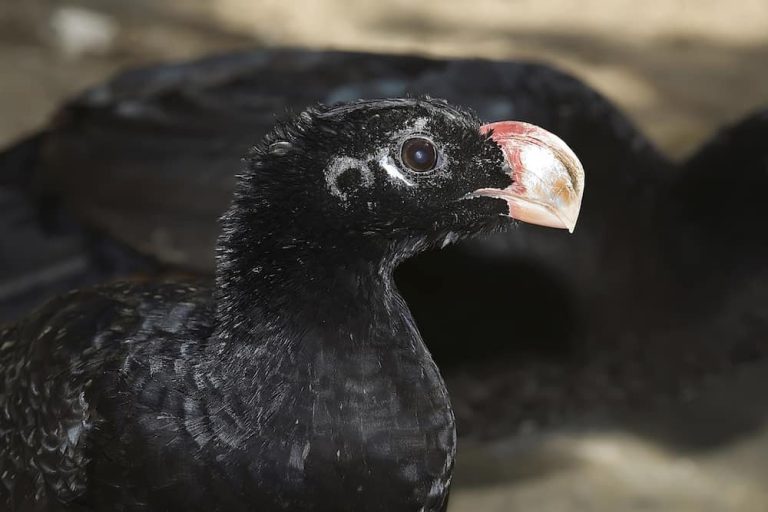
Compared with many continental systems, New Guinea has a different predator community (and fewer large placental carnivores), but ground and fruit-feeding birds still face predation from marsupial carnivores, raptors, and reptiles.
Cassowaries, megapods, and numerous pigeon species evolved strategies that would leave them vulnerable in Africa or Asia but serve them perfectly in New Guinea’s predator-light forests. This ecological peculiarity partially explains why the island hosts more avian diversity than any other island ecosystem on Earth.
With approximately 780 species recorded (including migratory visitors), Papua New Guinea ranks among the top globally in terms of bird species with restricted ranges. More significantly, around 40-50% of New Guinea’s bird species are endemic to the island (many shared with neighboring West Papua)—found nowhere else on the planet. The nation encompasses 12-13 Endemic Bird Areas as designated by BirdLife International, each representing distinct assemblages of species tied to specific habitat types and elevations.
Papua New Guinea also hosts seven endemic bird families, including berrypeckers, satinbirds, melampittas, and ifritids, making it essential territory for family listers.
ID 296853867 | Papua Guinea Birds © Mihir Joshi | Dreamstime.com
The Stars: Birds of Paradise and Why They Captivate
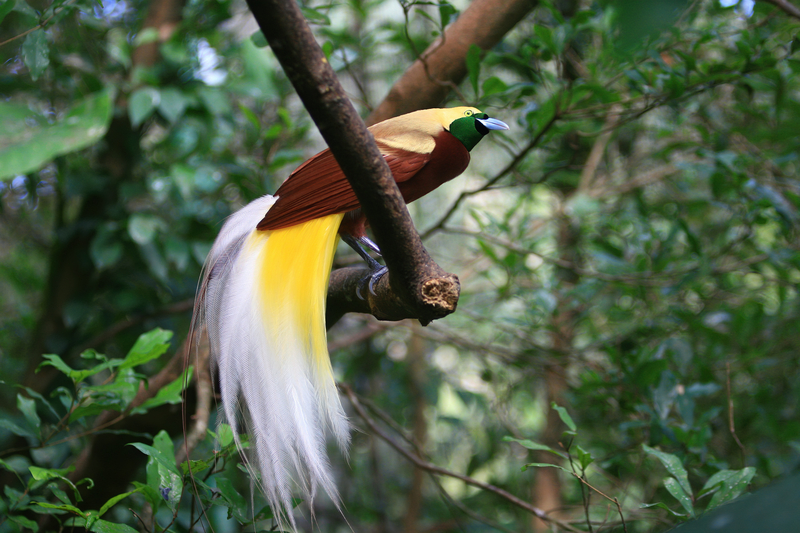
No discussion of bird watching Papua New Guinea can avoid addressing the family Paradisaeidae. These are the creatures that inspired 16th-century Europeans to name them after paradise itself, believing their ethereal plumes could only originate from heaven. Indigenous peoples of New Guinea held them in even higher regard, ascribing supernatural powers to birds whose elaborate courtship displays seemed to transcend the merely biological.
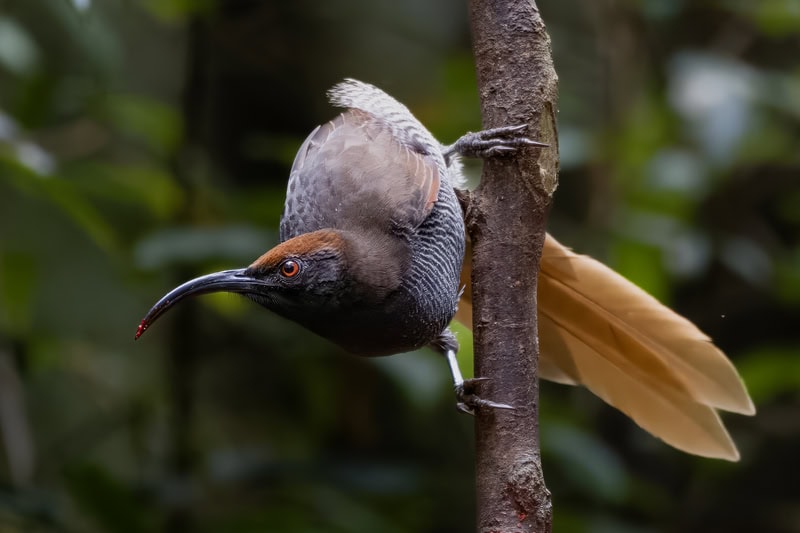
The approximately 38 species of birds of paradise found in Papua New Guinea represent an evolutionary radiation driven primarily by sexual selection. Males evolved increasingly elaborate plumage and courtship behaviors as females became more discriminating in their mate choices. The result is a family that includes some of nature’s most astonishing aesthetic achievements: the Ribbon-tailed Astrapia with tail feathers measuring over 3.3 feet (1 meter)—more than three times its body length. The King of Saxony Bird-of-paradise with its absurdly long head plumes that resemble nothing else in the avian world. The Blue Bird-of-paradise hanging upside-down while displaying its extraordinary plumage against the rainforest canopy.
These displays, captured magnificently in David Attenborough’s documentaries and Cornell University’s Birds of Paradise Project, have made these species among the most sought-after birds for serious watchers. Yet seeing them requires genuine effort. Males typically display in traditional lek sites high in the forest canopy, often at dawn. Many species remain solitary and elusive between display seasons. Finding them demands experienced local guides, physical fitness to access remote locations, and patience to wait for birds that may or may not appear on schedule.

ID 320496865 @ fluffandshutter | Dreamstime.com
The Raggiana Bird-of-paradise—Papua New Guinea’s national bird, featured prominently on the national flag—offers perhaps the most reliable viewing opportunity. Males gather at established lek sites near locations like Varirata National Park, performing their elaborate displays for assembled females. Even this relatively accessible species, however, requires dawn visits and a willingness to crane one’s neck skyward for extended periods, watching for movement in the high canopy where displays occur.
Beyond Paradise: Papua New Guinea’s Supporting Cast
While Papua New Guinea‘s birds of paradise rightfully claim center stage, Papua New Guinea’s birds extend far beyond this single family. The supporting cast includes species equally remarkable, if less internationally famous.
ID 202895218 @ Ondrejprosicky | Dreamstime.com
Cassowaries: Ancient Giants of the Forest
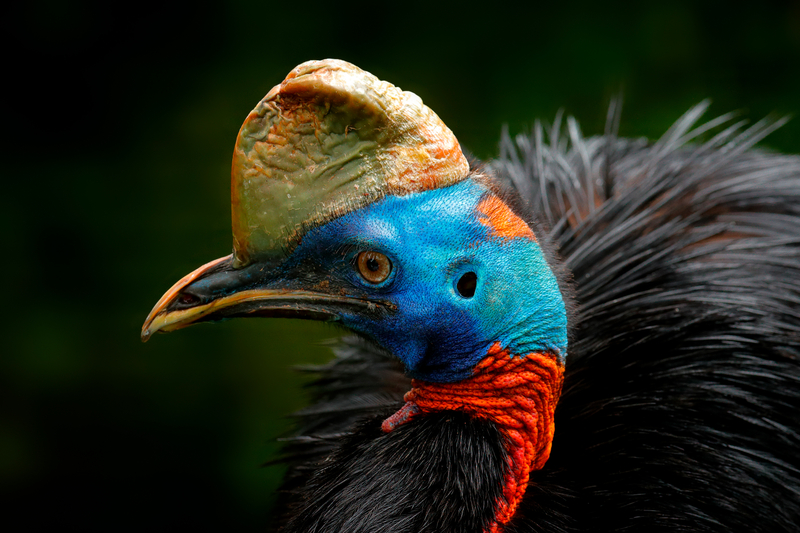
The Southern Cassowary and Dwarf Cassowary—massive, flightless birds related to Australia’s emus—patrol the forest floor with an almost dinosaurian presence. Standing up to over 4 feet (1.5 meters) tall and weighing up to 110 lbs (50 kilograms), cassowaries serve critical ecological functions as seed dispersers for large-fruited rainforest trees. Their powerful legs, equipped with dagger-like claws, make them potentially dangerous, though attacks remain rare. Observing these shy creatures requires luck and extreme quiet; they detect human presence long before observers spot them.
ID 134898761 @ Humorousking207 | Dreamstime.com
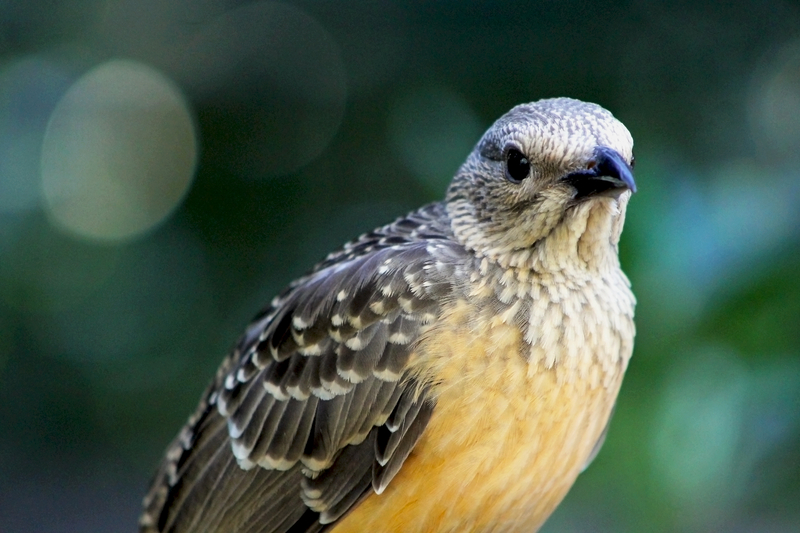
Bowerbirds: Nature’s Architects
The approximately 18 bowerbird species found in Papua New Guinea (out of around 20-27 in the family) demonstrate evolutionary innovation through architecture rather than plumage.
Male bowerbirds construct elaborate structures—”bowers”—to attract mates, decorating them with carefully selected items: colorful flowers, berries, shells, and even human-made objects in areas near settlements. The Fire-maned Bowerbird of the Adelbert Range, with its fiery orange crown and elaborate avenue-type bower, represents one of the family’s most striking species. Observing an active bower, watching males arrange and rearrange decorations while awaiting female visitors, provides insight into avian cognition that rivals any display of physical beauty.
Kingfishers, Pigeons, and Parrots: New Guinea’s Diverse Assemblages
Papua New Guinea hosts the world’s greatest diversity of pigeons, including the spectacular Victoria Crowned Pigeon—one of Earth’s largest pigeons, adorned with an elaborate lacy crest. The Paradise Kingfishers, with their elongated tail feathers and jewel-like coloration, rival any bird of paradise for sheer beauty. Over 40 parrot species, from tiny pygmy parrots measuring just 3.1–3.5 inches or 8-9 centimeters to the enormous Palm Cockatoo with its massive curved bill and bright red cheek patches, represent adaptive radiations into every available ecological niche.
The lowland and foothill forests host an almost overwhelming diversity of honeyeaters, fairy-wrens, monarchs, and berrypeckers—species whose names reflect their ecological roles or visual appeal. Each elevation zone presents different assemblages: lowland specialists give way to foothill species, which transition to montane forms, culminating in high-altitude specialists adapted to cloud forests and alpine grasslands approaching the tree line.
ID 180729643 @ Kitleong | Dreamstime.com
The Geography of Birding: Where to Find Papua New Guinea’s Avian Treasures
Papua New Guinea birds occupy distinct zones across the country’s varied topography, each requiring separate visits to experience fully.
Port Moresby and the Varirata National Park provide the most accessible introduction to Papua New Guinea birding. Within driving distance of the capital, the Sogeri Plateau hosts approximately 400 species, including the Raggiana Bird-of-paradise, Eastern Riflebird, and Wallace’s Fairy-wren. For travelers with limited time, this region offers remarkably productive birding without the logistical challenges of more remote locations.
The Southern Highlands, centered around Tari and accessible through lodges like Ambua and Rondon Ridge, represent the holy grail for bird of paradise enthusiasts. These montane forests at 7,200–9,200 feet (2,200-2,800 meters) elevation host over a dozen birds of paradise species, including the Blue Bird-of-paradise, Princess Stephanie’s Astrapia, and the King of Saxony. The comfortable temperatures, stunning mountain vistas, and concentrated bird diversity make this region essential for serious birders.
The Sepik River, winding between 560–745 miles (900-1,200 km) through lowland rainforest, provides entirely different birding opportunities. Accessible primarily by boat, the Sepik wetlands host herons, egrets, kingfishers, hornbills, and the spectacular Twelve-wired Bird-of-paradise. The region’s cultural significance—home to crocodile-worshipping communities and elaborate spirit houses—adds anthropological depth to birding expeditions.
Remote Western Province, including locations near Kiunga and Tabubil, offers access to species extirpated by hunting elsewhere. The Flame Bowerbird, Shovel-billed Kookaburra, King Bird-of-Paradise, New Guinea Flightless Rail, the Island Imperial Pigeon, and various large pigeons survive here in populations viable enough for reliable observation. These frontier regions require significant logistical commitment but reward visitors with species impossible to find elsewhere.
New Britain, an island province northeast of the mainland, lacks birds of paradise but compensates with its own endemic avifauna. The New Britain Boobook (a small owl), various endemic honeyeaters and kingfishers, and healthy populations of Blue-eyed Cockatoo and Purple-bellied Lories make this region essential for comprehensive coverage of Papua New Guinea’s avifauna. Birders also seek the elusive Golden Masked Owl, among other specialties.
The Historical Legacy: From Plume Trade to Conservation
Understanding bird watching in Papua New Guinea requires acknowledging a complicated historical relationship between humans and these remarkable birds. When the surviving crew of Magellan’s circumnavigation returned to Europe in 1522 carrying bird-of-paradise skins, they initiated centuries of fascination and exploitation.
The millinery trade of the late 19th and early 20th centuries devastated bird of paradise populations. Between 1905 and 1920, an estimated 30,000-80,000 bird of paradise skins were exported annually to feather auctions in London, Paris, and Amsterdam. Women’s hats adorned with entire birds or elaborate plumes drove hunters deep into previously unexplored regions. The Yonggom people of Western Province, who had traditionally used paradise feathers in ceremonial headdresses, found themselves caught in international trade networks that valued these birds purely as commodities.
The discovery of new species continued throughout the 20th century. Luigi D’Albertis identified the Raggiana Bird-of-paradise during his 1873 expedition, naming it after his friend the Marquis Raggi. The Ribbon-tailed Astrapia, discovered only in 1939, remained one of the last major bird of paradise species to be documented scientifically.
Today, all birds of paradise in Papua New Guinea enjoy legal protection, though enforcement remains challenging in remote regions. The transition from exploitation to conservation has been gradual and incomplete. Hunting pressure continues in some highland areas where human population density is high. Habitat loss from logging, mining, and oil palm conversion poses the more systematic threat to Papua New Guinea’s avifauna.
Modern bird watching tourism, when conducted ethically with local community involvement, provides economic incentives for conservation. Lodges like Rondon Ridge and Ambua employ local guides whose expertise in locating birds derives from generations of forest knowledge. The fees paid by international birders support communities while giving them tangible reasons to protect forest habitat and the species within it.
The Practicalities: What Serious Birders Should Understand
Bird watching in New Guinea demands realistic expectations about what this experience entails. This is not a destination for casual observers or those requiring consistent comfort.
Two-thirds of Papua New Guinea remains forested, with 85 percent classified as essentially untouched. Many prime birding locations exist in remote areas accessible only by light aircraft or after days of difficult overland travel. Permission to enter tribal lands requires careful negotiation through experienced operators. The terrain is steep, often muddy, and physically demanding. Dense tropical vegetation obscures sightlines and makes spotting birds in the canopy genuinely difficult.
Weather patterns influence birding success significantly. The drier months from April through September generally provide better conditions, though “drier” remains a relative term in tropical rainforest. Afternoon thunderstorms can disrupt plans, and persistent rain sometimes forces schedule adjustments.
Independent birding in Papua New Guinea is essentially impossible. The combination of logistical complexity, safety considerations, and need for specialized local knowledge means working with established operators. The best expeditions feature small groups (typically under 12 participants), experienced international guides who understand bird identification, and crucially, skilled local guides who know where specific species can be found and how to access those locations.
Costs reflect the destination’s remoteness and the intensive support required. Papua New Guinea ranks among the world’s most expensive birding destinations, with comprehensive tours often exceeding $10,000 per person for two-week itineraries. These costs cover charter flights to remote locations, lodge accommodations (which range from genuinely comfortable to basic but adequate), local guides, and the complex logistics of moving groups through areas with limited infrastructure.
Why It Matters: The Case for Committing to Papua New Guinea
For birders who have checked off most accessible species globally, Papua New Guinea represents one of the last frontiers where genuinely new avian encounters await. The 80+ endemic species found nowhere else mean that even the most experienced observers will compile lists of first-time sightings.
But the appeal extends beyond list-building. Papua New Guinea offers something increasingly rare: the opportunity to observe birds in ecosystems that function largely as they have for millennia. The ecological relationships between fruiting trees and the birds that disperse their seeds, between displaying male birds of paradise and the evolutionary pressures that shaped their extraordinary plumage—these dynamics continue here in forms disrupted or destroyed elsewhere.
Sir David Attenborough, whose passion for birds of paradise has lasted decades, describes them as “the most romantic and glamorous birds in the world.” For those who share even a fraction of that passion, Papua New Guinea delivers experiences that justify every challenge involved in reaching them. The King of Saxony Bird-of-paradise with his absurd head plumes. The Blue Bird-of-paradise hanging inverted while displaying its extraordinary iridescent plumage. The Superb Bird-of-paradise transforming itself into a geometric pattern of black and iridescent blue. These are moments that transcend mere observation and become encounters with evolutionary artistry at its most extreme.
Bird watching in Papua New Guinea is not for everyone. It requires physical fitness, flexibility when plans change, tolerance for basic conditions, and significant financial investment.
But for serious birders who understand that the most profound wildlife experiences demand commitment proportional to their rarity, Papua New Guinea represents an incomparable opportunity—a chance to witness avian evolution still unfolding among one of the world’s most remarkable bird faunas. Papua New Guinea’s wonderful birds, from paradise kingfishers to ancient cassowaries, deliver experiences that justify every challenge involved in reaching them.
Quick Facts About Bird Watching in Papua New Guinea
- Travel insurance covering medical evacuation is mandatory with most tour operators in Papua New Guinea.
- Waterproofs are essential for bird watching in Papua New Guinea, even during the dry season.
- DEET-based insect repellent is recommended for bird watching in Papua New Guinea.
- The climate in Papua New Guinea is tropical, with variations depending on the altitude, leading to cooler temperatures in the highlands.
- Birding tours in Papua New Guinea often include cultural experiences such as traditional dances and local crafts alongside visits to both lowland rainforests and highland areas, providing diverse habitats for birdwatching.
- Travelers are advised to plan their flights to arrive in Cairns, Australia, before continuing to Papua New Guinea.