Top 19 Wildlife Experiences for 2026

Last Updated on January 24, 2026 by Amylee Silva
The world’s most amazing wildlife experiences don’t announce themselves with fanfare. They unfold in morning mist on volcanic slopes, in the golden light of savannas, and in waters so remote that silence itself feels like a presence. These are moments that money cannot manufacture; only patience, timing, and expert guidance can deliver.
For discerning travelers seeking authentic encounters with nature’s most magnificent creatures, 2026 offers unparalleled opportunities across six continents. Discover the best places to visit in 2026 to experience these 19 wildlife encounters that represent the pinnacle of natural world exploration.
Table of Contents
- Gorilla Trekking — Rwanda or Uganda
- Lemurs of Madagascar
- The Great Wildebeest Migration — Serengeti & Masai Mara
- Jaguars of the Pantanal — Brazil
- Tigers of India
- Orangutans of Borneo or Sumatra
- Galápagos Giant Tortoises — Ecuador
- Komodo Dragons — Indonesia
- Big Five Safari — South Africa
- Okavango Delta Wetlands — Botswana
- Humpback Whale Migration — Tonga or Baja
- Whale Sharks — Philippines or Mexico
- Penguins of Antarctica
- Monarch Butterfly Migration — Mexico
- Snow Monkeys of Japan
- Wild Horses of the Camargue — France
- Red Deer Rut — Scottish Highlands
- Eagle Hunters of Mongolia
- Arctic Wildlife
1. Gorilla Trekking — Rwanda or Uganda
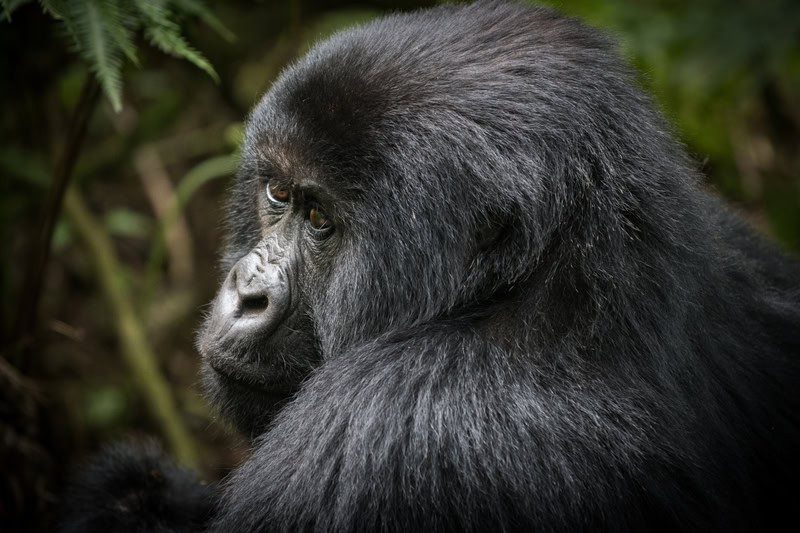
Few wildlife experiences can rival the profound intimacy of sitting mere meters from a mountain gorilla family in their misty volcanic domain. In Rwanda’s Volcanoes National Park and Uganda’s Bwindi Impenetrable Forest, fewer than 1,000 mountain gorillas remain, making every encounter a privilege reserved for those willing to trek through challenging terrain.
The silverback patriarch, weighing up to 400 pounds, may regard you with intelligent eyes that seem to recognize your shared ancestry. Juveniles tumble through the underbrush, while mothers cradle infants with tenderness that transcends species. These hour-long visits, strictly limited to protect the gorillas, often leave guests speechless—a rarity in our age of constant commentary.
Best season: June–September, December–February
2. Lemurs of Madagascar
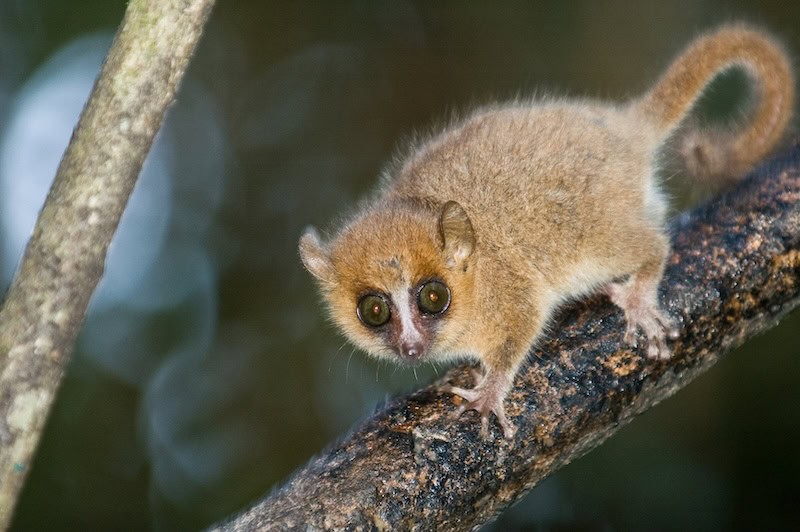
Madagascar separated from the African continent 165 million years ago, creating an evolutionary laboratory unlike anywhere on Earth. Here, lemurs evolved into over 100 species found nowhere else—from the cat-sized indri whose haunting calls echo through rainforests, to the acrobatic Verreaux’s sifakas that appear to dance across open ground.
In reserves like Andasibe-Mantadia and Ranomafana, expert guides track these charismatic primates through dense jungle, interpreting behavior and locating species that range from the tiny mouse lemur (small enough to fit in a teacup) to the distinctive ring-tailed lemurs of Isalo National Park. October brings the particular joy of observing newborn lemurs clinging to their mothers.
Best season: April–November
3. The Great Wildebeest Migration — Serengeti & Masai Mara
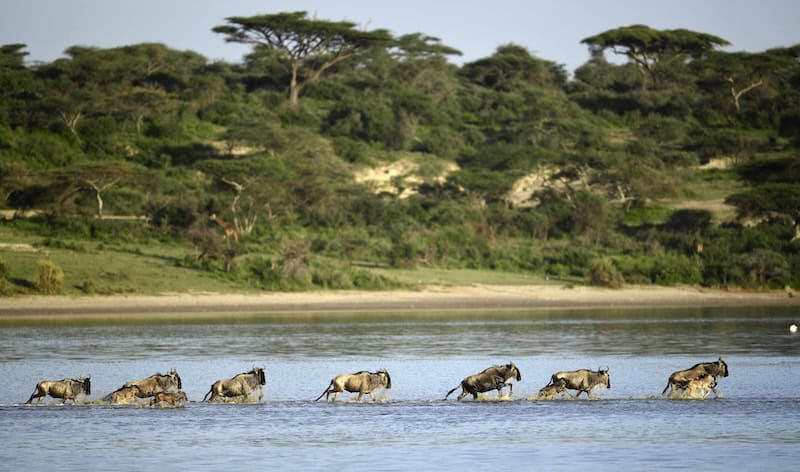
Two million animals moving as a single force across 1,200 miles of East African wilderness—this is Earth’s greatest terrestrial wildlife spectacle. The Great Migration follows ancient pathways between Tanzania’s Serengeti and Kenya’s Masai Mara, a circular journey governed by rainfall and the eternal search for fresh grazing.
The drama peaks during river crossings, when massed herds of wildebeest, zebra, and gazelles plunge into crocodile-infested waters at points along the Mara and Grumeti rivers. The chaos is primal: animals leap from high banks, strong currents sweep away the weak, and prehistoric reptiles wait beneath the surface. Those who survive climb the far bank to graze on grass worth dying for.
Witnessing a crossing requires strategy, patience, and luck—the herds may gather for days before a single wildebeest triggers the collective rush. Expert guides position you at proven crossing points, though nature keeps her own schedule.
Best season: June–October (river crossings peak July–September)
4. Jaguars of the Pantanal — Brazil

Brazil’s Pantanal wetlands harbor the planet’s highest density of jaguars, and crucially, these powerful cats have grown accustomed to safari boats on the region’s rivers. This habituation has transformed the Pantanal into the world’s most reliable destination for wild jaguar encounters, with success rates exceeding 90% during peak season.
Along the Cuiabá, Piquiri, and Three Brothers rivers, jaguars patrol the banks in broad daylight, hunting capybaras and caimans. You might watch a 250-pound male swim across channels with muscular grace, or witness the explosive moment a jaguar strikes. Unlike their notoriously elusive counterparts elsewhere, Pantanal jaguars often seem indifferent to boats positioned just meters away, allowing for photographic opportunities that simply don’t exist in other ecosystems.
Best season: July–October
5. Tigers of India
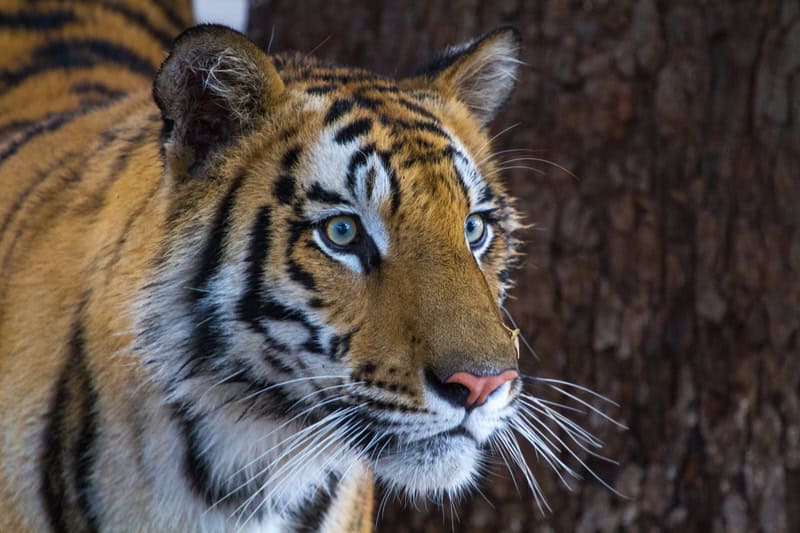
India protects over 70% of the world’s wild tigers, and the country’s premier reserves offer genuine opportunities to encounter these magnificent predators in their natural habitat. Ranthambore, Bandhavgarh, and Kanha national parks have cultivated reputations for sightings, particularly during the hot pre-monsoon months when tigers seek water sources.
A tiger sighting often begins with alarm calls from langur monkeys or spotted deer—nature’s early warning system. Then, perhaps, amber and black stripes materialize in dappled forest light. The tiger may pause at a waterhole, drink with regal composure, then vanish into grass with surprising stealth for an animal that weighs 500 pounds.
Each tiger possesses unique stripe patterns, and experienced guides can identify individuals by sight, sharing histories of territorial disputes and family lineages that add narrative depth to every encounter.
Best season: November–May (March–May for peak sightings near water)
6. Orangutans of Borneo or Sumatra
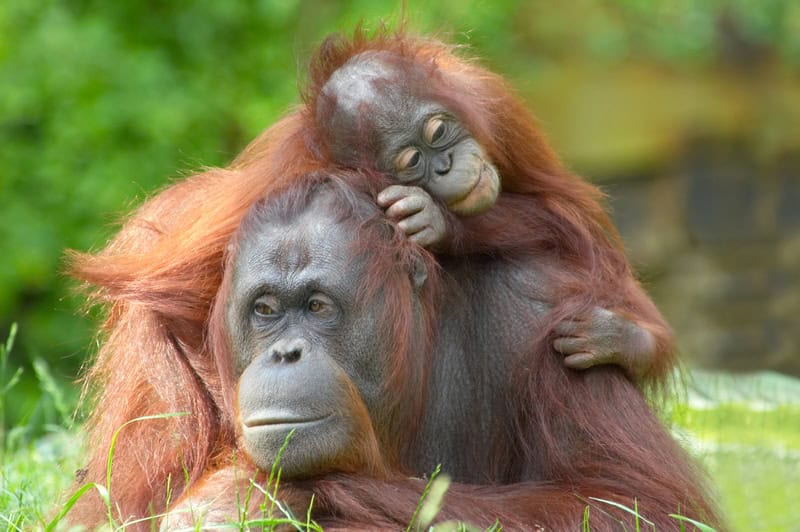
In the ancient rainforests of Southeast Asia, our red-haired relatives swing through canopies 100 feet above the forest floor. Orangutans—their name means “person of the forest” in Malay—share 97% of our DNA, and their intelligent, contemplative expressions often prompt profound reflection on our evolutionary connections.
Borneo’s Danum Valley and Sumatra’s Gunung Leuser National Park offer the most rewarding orangutan encounters. You might spend an afternoon watching a mother fashion tools to extract insects from tree bark, or observe adolescent males practicing the long calls they’ll use to establish territory once mature. The critically endangered Tapanuli orangutan, identified as a distinct species only in 2017, numbers fewer than 800 individuals.
Best season: April–October (dry season for easier trekking)
7. Galapagos Giant Tortoises — Ecuador
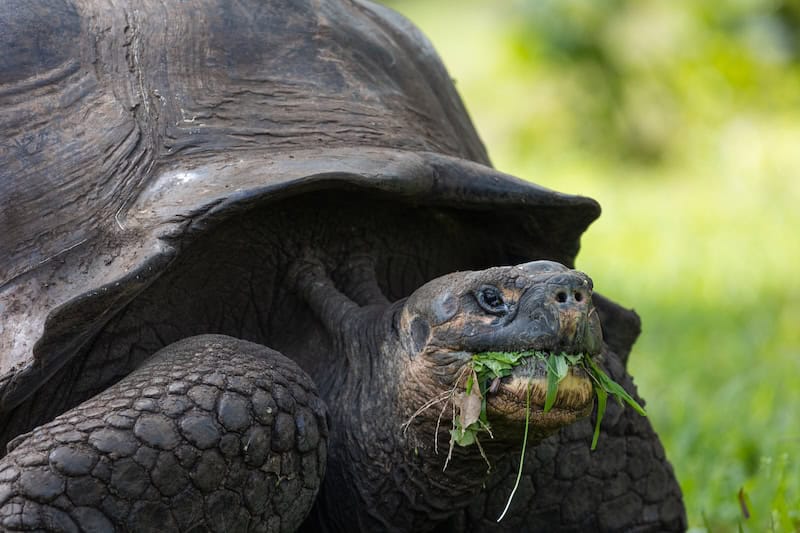
Charles Darwin observed these ancient reptiles in 1835, and their island-specific variations helped inspire his theory of evolution. Today, giant tortoises, some weighing over 500 pounds and exceeding 100 years of age, graze on volcanic highlands across the Galápagos Islands with the unhurried dignity of creatures that have no natural predators.
On Santa Cruz Island’s highlands and Isabela’s volcanic slopes, you can walk among these gentle giants as they browse on vegetation or wallow in muddy pools. Their longevity and the archipelago’s isolation create an atmosphere that feels removed from normal time—a living museum where evolution remains visible and ongoing.
Coastal excursions also reveal marine iguanas basking on lava rocks, the only lizards on Earth adapted to forage in the sea. And playful sea lions often share the shoreline with visitors, adding an extra layer of wildlife interaction to Galápagos encounters.
The tortoises’ fearlessness around humans reflects millennia spent on islands where terrestrial predators never existed, making encounters remarkably intimate and utterly unique.
Best season: Year-round (June–November slightly cooler and drier)
8. Komodo Dragons — Indonesia

The world’s largest lizards—some exceeding 10 feet in length and 300 pounds—rule their Indonesian island kingdom with Mesozoic authority. Komodo dragons hunt deer and wild boar with patience and venomous bites that doom prey to bacterial infection and blood loss, then track wounded animals for days using their acute sense of smell.
In Komodo National Park, ranger-guided treks through arid landscapes bring you safely near these prehistoric predators. A resting dragon might appear sluggish, but these reptiles can sprint at 12 miles per hour when motivated. Watching them feed on a carcass offers a glimpse into a more brutal evolutionary era, when giant reptiles dominated terrestrial ecosystems.
The dragons’ island isolation has preserved behaviors and predatory strategies largely unchanged for millions of years, creating wildlife encounters that feel genuinely primordial.
Best season: April–November

9. Big Five Safari — South Africa
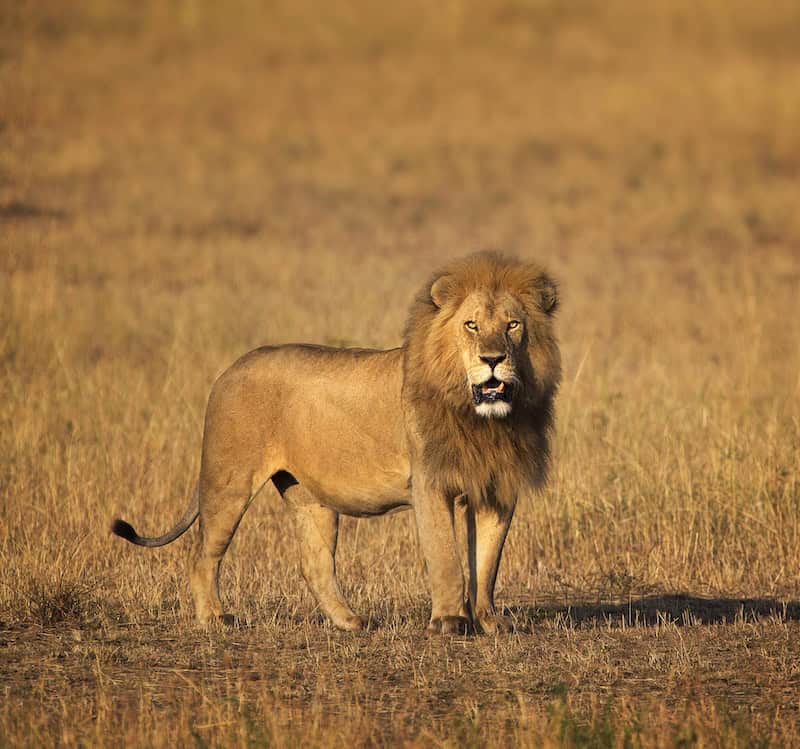
The term “Big Five” originated with hunters seeking the continent’s most dangerous game: lion, leopard, elephant, rhino, and buffalo. Today, these species represent an African safari’s ultimate checklist, and South Africa’s premier private reserves deliver all five with remarkable consistency.
In areas like Sabi Sand and Timbavati, decades of professional guiding and conservation have created ecosystems where wildlife thrives and habituated animals permit close approach. You might track a leopard to its tree-cached kill at dawn, watch a lion pride coordinate a buffalo hunt, or keep respectful distance as a massive elephant bull demonstrates exactly why these animals command wariness despite their herbivorous diet.
South Africa’s luxury lodges elevate the safari experience with exceptional cuisine, spa treatments, and accommodations that would satisfy the most discerning urban hotel guests—wilderness without sacrifice of comfort.
Best season: May–September (prime dry season game viewing)
10. Okavango Delta Wetlands — Botswana

When the Okavango River floods into Botswana’s Kalahari Desert each year, it creates the world’s largest inland delta—a 6,000-square-mile oasis that attracts staggering concentrations of wildlife. Traveling by mokoro (traditional dugout canoe) offers a perspective that motorized vehicles cannot match: silence, stillness, and the intimate sounds of the delta’s rhythm.
Elephants wade belly-deep through channels, hippos grunt territorial warnings, and African fish eagles patrol from riverside perches. On the islands and floodplains, predator-prey dramas unfold—lions have adapted to hunt in water, demonstrating the behavioral flexibility that makes African wildlife so captivating.
The Okavango’s seasonal flooding creates constantly shifting landscapes, meaning no two visits are identical. Experienced guides read water levels, animal movements, and vegetation patterns to position guests for optimal encounters.
Best season: June–October
11. Humpback Whale Migration — Tonga or Baja
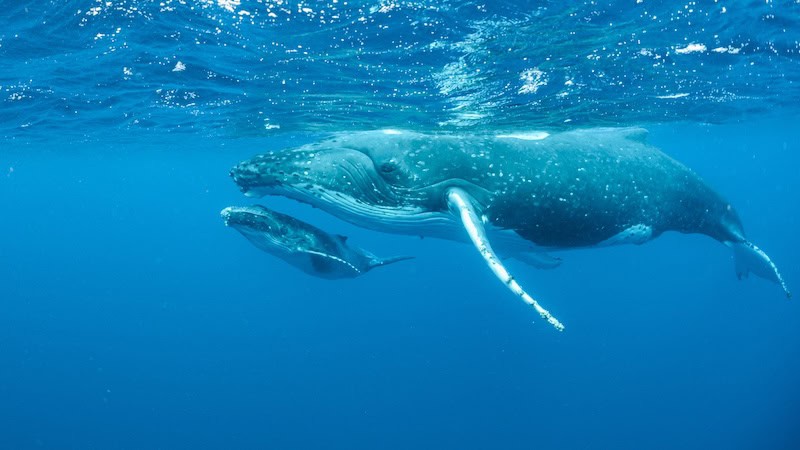
Humpback whales undertake annual migrations of up to 5,000 miles between polar feeding grounds and tropical breeding waters. Two destinations offer particularly intimate whale watching encounters: Tonga’s warm Pacific waters and Mexico’s Baja California.
In Tonga, licensed operators permit swimming with mother whales and their newborn calves, a privilege offered in only a few places worldwide. Floating beside a 40-ton whale and her days-old calf, hearing their vocalizations resonate through your body, ranks among nature’s most humbling encounters. These intelligent mammals often display curiosity toward humans, approaching boats and seeming to study us as intently as we observe them.
Baja’s San Ignacio Lagoon offers a different intimacy: gray whales that approach boats and appear to enjoy being touched, behavior so unusual that early reports were dismissed as exaggeration.
Best season: July–October (Tonga) / January–March (Baja)
12. Whale Sharks — Philippines or Mexico
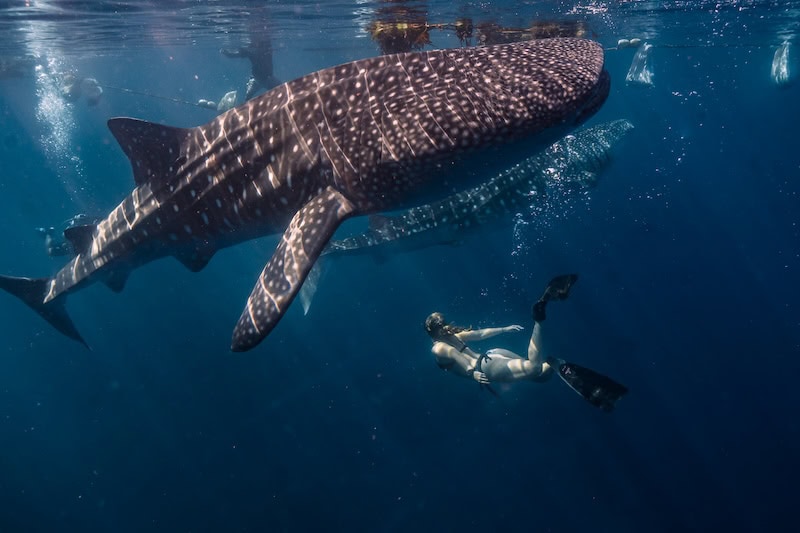
The ocean’s largest fish—growing to 40 feet and weighing 20 tons—filter-feed on plankton with mouths that could swallow a person but throats too narrow to permit it. Whale sharks inspire awe through sheer scale: swimming beside one creates the sensation of encountering a living submarine, utterly gentle and profoundly alien.
The Philippines’ Donsol Bay and Mexico’s waters near Isla Mujeres and La Paz offer seasonal aggregations where multiple whale sharks may feed in proximity. Snorkeling alongside these spotted giants as they vacuum plankton requires only basic swimming ability, making this accessible to most travelers while losing none of its majesty. In some seasons, snorkelers may also encounter graceful manta rays feeding in the same plankton-rich waters.
Conservation concerns surround some whale shark tourism, making selection of ethical operators essential. Responsible encounters prohibit touching and maintain proper distances, allowing these filter-feeders to feed undisturbed. These same principles of ethical wildlife tourism apply across the world’s best places to go snorkeling, from coral atolls to kelp forests.
Best season: March–June (Philippines) / June–September (Mexico)
13. Penguins of Antarctica
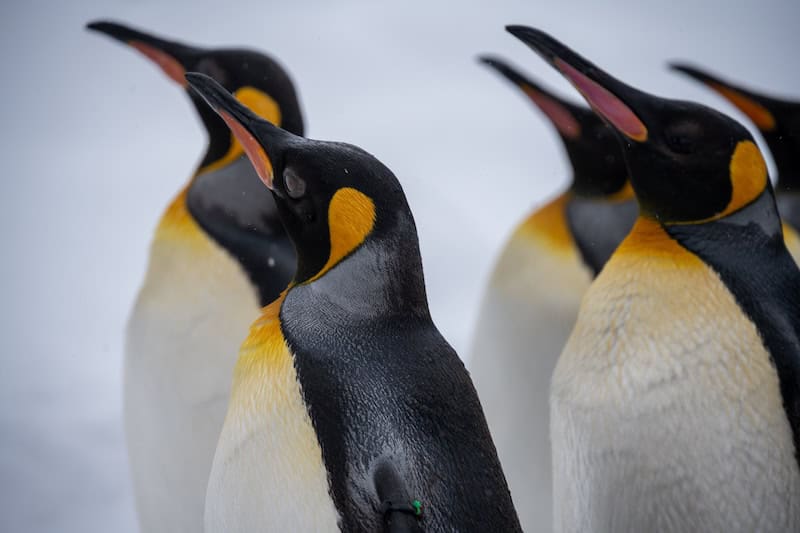
Antarctica’s penguin colonies—numbering in the hundreds of thousands—create one of Earth’s great wildlife spectacles. Chinstrap, Adélie, and gentoo penguins crowd rocky shores, three of the eight species of penguins found in the Antarctic region. Their cacophonous calls and comical walks belie remarkable adaptations to the harshest environment on the planet.
During the Antarctic summer, penguins breed, raise chicks, and defend territories with ritualized displays and occasional physical combat. You might watch penguin “highways” where birds toboggan on their bellies across ice, or witness parents regurgitating krill to feed insistent chicks. The sight of thousands of penguins porpoising through frigid waters demonstrates the athletic prowess hidden beneath their tuxedoed appearance.
King penguins and emperor penguins—larger species with different breeding strategies—add diversity to Antarctic encounters, with South Georgia Island offering particular opportunities to observe king penguins in massive, densely packed colonies.
Best season: November–February
14. Monarch Butterfly Migration — Mexico
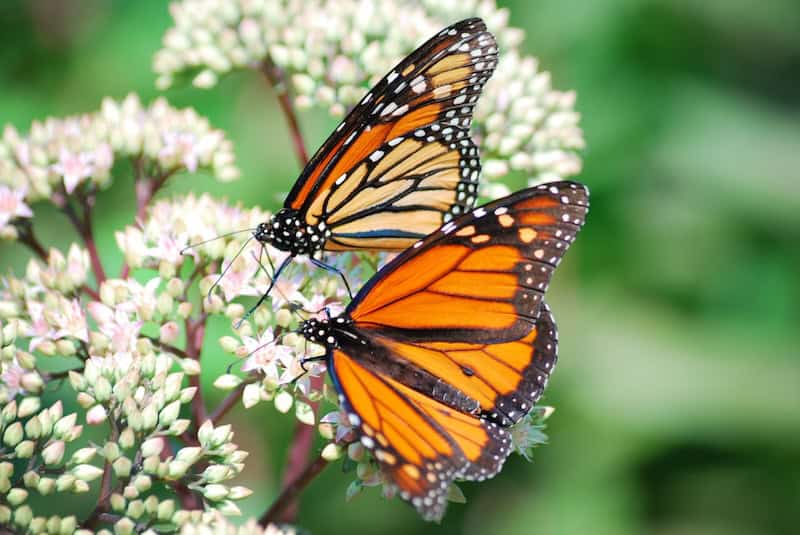
Each autumn, 100 million monarch butterflies complete a multi-generational migration from North America to Mexico’s oyamel fir forests, where they cluster in such density that branches sag under their collective weight. The sight of trees transformed into living orange sculptures defies adequate description—you must witness the scale personally.
In sanctuaries like El Rosario and Sierra Chincua, butterflies carpet forest floors and fill the air with silent flutter when sun warms their wings. Scientists still don’t fully understand how monarchs—none of whom has made the journey before—navigate to the same few mountain forests used by their ancestors. The mystery deepens the experience.
Warming temperatures threaten these overwintering sites, lending urgency to witnessing this phenomenon while it persists in its current form.
Best season: January–March (peak congregation)
15. Snow Monkeys of Japan
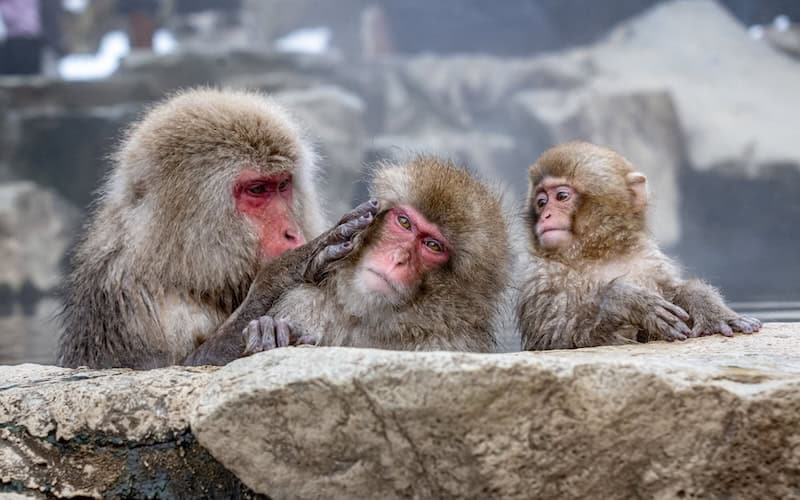
Japanese macaques—the world’s northernmost non-human primates—have adapted to extreme cold in ways both practical and delightful. In Jigokudani Monkey Park, wild macaques soak in natural hot springs, their faces steaming and expressions appearing blissfully content as snow falls around them.
These intelligent primates learned to use the hot springs by observation and cultural transmission, demonstrating problem-solving abilities that continue to fascinate researchers. Watching infant macaques play in thermal pools while elders soak with closed eyes creates scenes that feel simultaneously exotic and oddly relatable.
The surrounding Japanese Alps provide dramatic winter landscapes, and sightings of other animals like serow and foxes occasionally reward patient observers. and the monkeys’ fearlessness around humans permits photography that captures both the animals and their spectacular environment.
Best season: December–February
16. Wild Horses of the Camargue — France
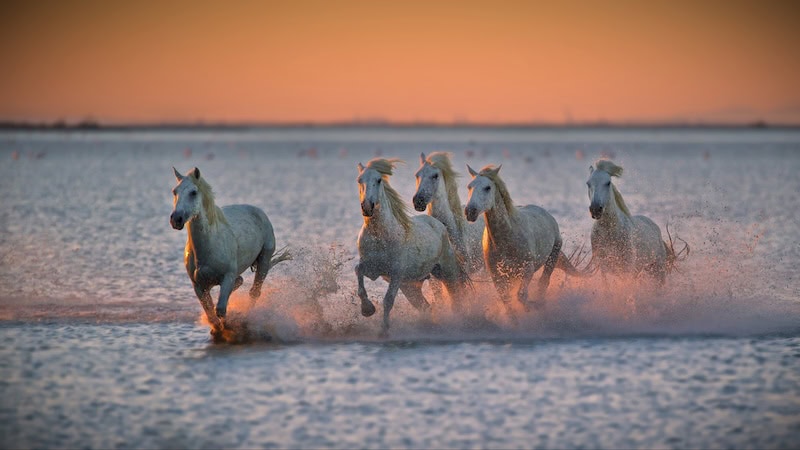
Southern France’s Camargue wetlands harbor semi-wild white horses that gallop through salt marshes and shallow lagoons in scenes that could illustrate mythology. These robust horses, believed to be one of the world’s oldest breeds, have adapted perfectly to the region’s harsh, salty environment.
Watching Camargue horses thunder through water at sunset, manes flowing and spray catching golden light, offers wilderness drama in the heart of civilized Europe. The surrounding Mediterranean landscapes support flamingo colonies, black bulls, and over 400 bird species, creating a complete ecosystem unlike anywhere else on the continent.
Guided rides on Camargue horses provide an immersive way to experience these wetlands, moving through the landscape as the resident wildlife would.
Best season: May–October
17. Red Deer Rut — Scottish Highlands

Each autumn, Scotland’s Highland glens echo with roars of red deer stags competing for mating rights. The rut transforms normally placid landscapes into arenas where massive males clash antlers in contests of strength that can last hours and occasionally prove fatal.
The Scottish Highlands in October offer more than deer: golden eagles, red squirrels, and the possibility of wildcats add to wildlife portfolios, while the autumn colors and misty atmospheres create conditions that reward photographers willing to rise before dawn.
Stalking within photography range of rutting stags requires skill and patience—these animals are alert to threats, and their autumn aggression makes respectful distance mandatory.
Best season: Late September–October
18. Eagle Hunters of Mongolia
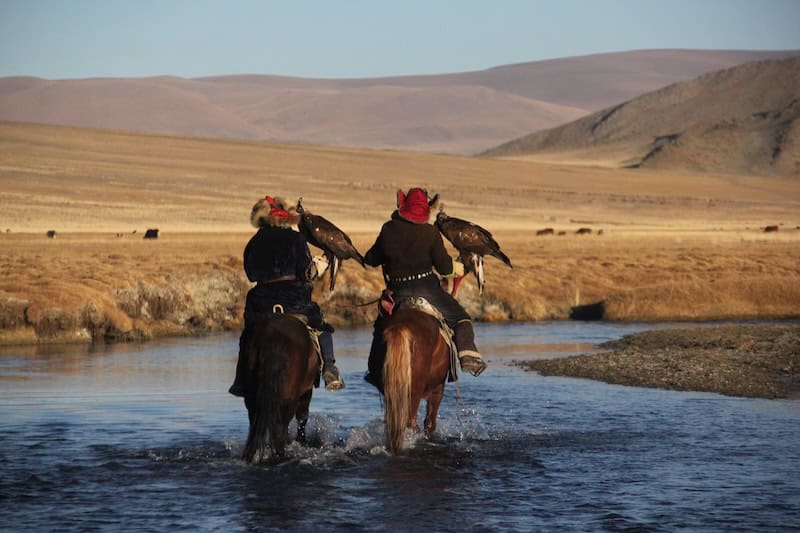
On the windswept steppes of western Mongolia, Kazakh hunters maintain a centuries-old tradition of training golden eagles to hunt foxes and hares. These magnificent raptors, with seven-foot wingspans and talons capable of crushing bone, form bonds with their handlers that challenge assumptions about human-wildlife relationships.
The annual Golden Eagle Festival in Bayan-Ölgii showcases this cultural practice, though smaller gatherings and individual hunter visits offer more intimate experiences. Watching an eagle launched from horseback, hunting across endless grasslands before returning to its handler’s arm, connects you to pastoral nomad traditions that persist despite modernity’s encroachment.
The Mongolian landscapes themselves—vast, empty, and starkly beautiful—form an essential part of this wildlife experience.
Best season: September–October (festival season)
19. Arctic Wildlife
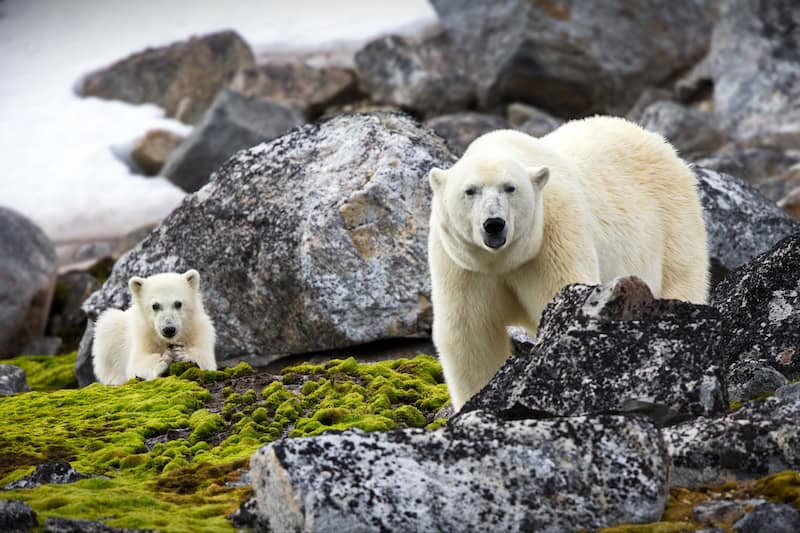
The Arctic’s long winter nights and vast frozen landscapes reveal wildlife adaptations as remarkable as any on Earth. Reindeer dig through snow for lichen, arctic foxes hunt in 24-hour darkness, and white-tailed eagles patrol icy coastlines.
Across Arctic regions from Scandinavia to Canada’s far north and Norway’s Svalbard archipelago, expert guides track wildlife in some of the planet’s last true wildernesses. You might observe arctic foxes hunting in 24-hour darkness, reindeer herds moving across snowbound tundra, or polar bears patrolling sea ice in search of seals.
The Arctic’s fragility adds poignancy to these encounters. Climate change impacts this region more rapidly than most, making each visit a potentially irreplaceable experience as ice-dependent ecosystems transform.
Best season: November–March
Planning Your 2026 Wildlife Experiences
These 19 encounters represent wildlife at its most spectacular, but they demand more than simple booking. Weather patterns shift, animal behaviors vary, and even the best-laid plans require flexibility. Working with specialists who monitor conditions, maintain relationships with the world’s finest guides, and understand the subtle timing that separates good wildlife experiences from transcendent ones makes the difference between merely seeing animals and truly connecting with the natural world.
The wildlife experiences that change us are never guaranteed. It’s that uncertainty that forms part of their value and what makes them a life-changing experience.
But with expert planning, appropriate timing, and genuine respect for the wild creatures we seek, 2026 can deliver encounters that remind us why nature still holds the power to inspire wonder in even the most traveled among us.
For travelers already dreaming of their next adventure, these wildlife experiences offer the ultimate connection to the natural world.