The Living Cultures of Papua New Guinea: A Journey Among the World’s Most Diverse Peoples

Last Updated on January 12, 2026 by Amylee Silva
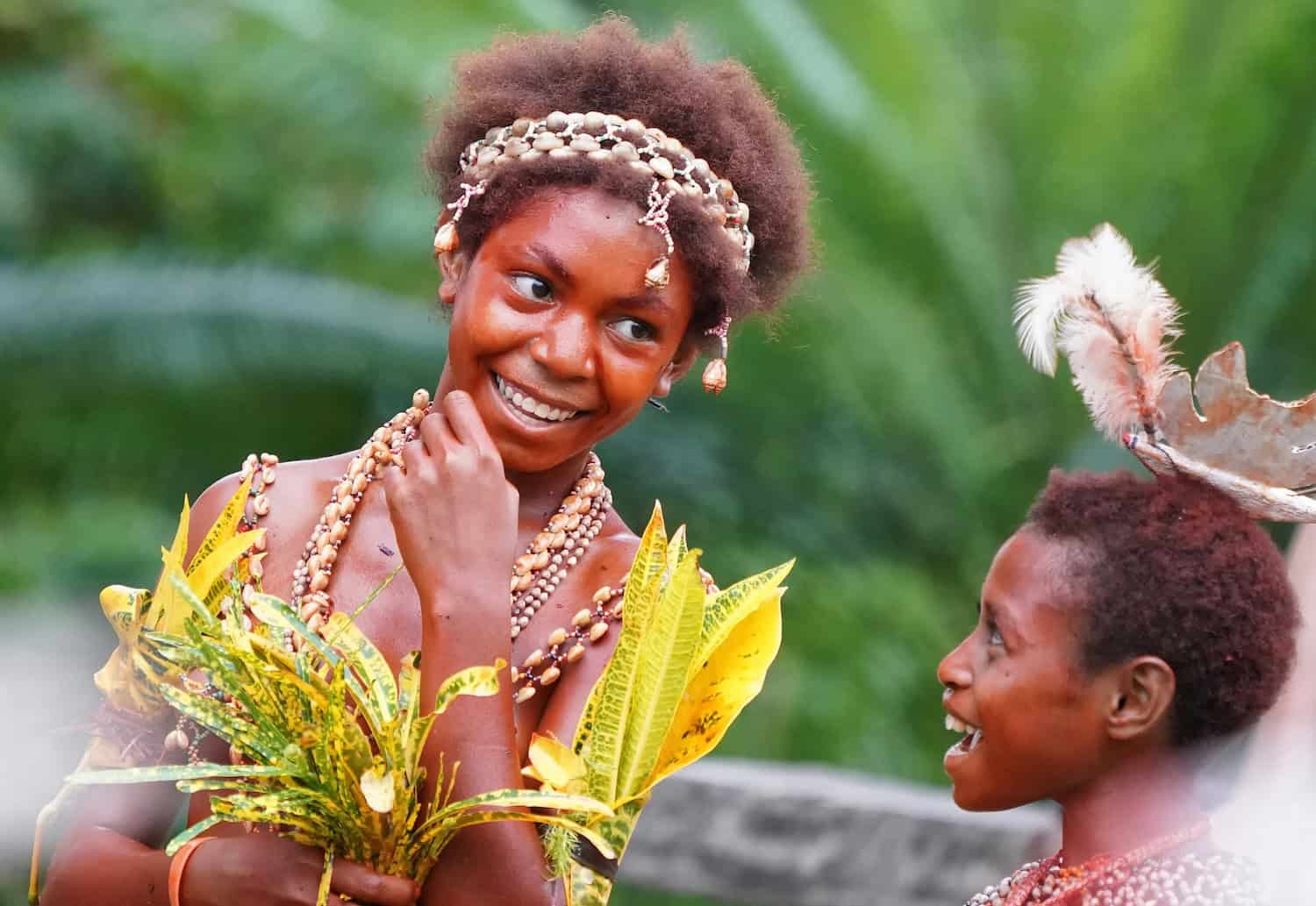
In an age when authentic cultural encounters grow increasingly rare, Papua New Guinea remains a compelling anomaly. Here, in the mountainous spine of the Eastern Highlands and along the winding corridors of the Sepik River, over 800 distinct ethnic groups maintain traditions shaped by human societies that have developed on the island over tens of thousands of years.
With a country’s population approaching 10 million people spread across these communities, Papua New Guinea’s people represent not a single culture, but rather a mosaic of human expression so intricate that anthropologists continue to discover new dimensions within it.
The island nation encompasses the eastern half of New Guinea, and as the world’s second-largest island, it holds a singular distinction: it is home to approximately 12% of the world’s languages. With over 820 indigenous tongues spoken by the indigenous population across 22 provinces, Papua New Guinea stands as the most linguistically diverse nation on Earth. This extraordinary heterogeneity extends far beyond language into domains of spiritual practice, social organization, artistic tradition, and ecological adaptation.
Go with Miru Adventures
Spend three full days exploring the unforgettable Jayawijaya Mountains and magical Baliem Valley. Attend the annual Baliem Valley Culture Festival. Enjoy traditional foods while watching a mock battle, energetic dance performances, and competitions such as archery and spear-throwing.
With over 30 years of expedition expertise, Miru Adventures delivers an unforgettable journey into Papua New Guinea’s most remote highlands.
New Guinea: The Paradise Island, now departing July 28th,2026.

The Highlands: Where Isolation Preserved Diversity
The impenetrable geography of Papua New Guinea’s interior, cloud forests ascending into mountain ranges, deep valleys carved by ancient rivers, created natural barriers that allowed distinct societies to flourish in isolation.
The island of New Guinea, divided politically between Papua New Guinea in the east and West Papua (part of Indonesia) in the west, contains some of the world’s most impenetrable terrain. Some highland communities experienced their first sustained outside contact only in the mid-20th century, their cultures developing with relatively limited external influence over long periods of time.
This geographical isolation explains much about New Guinea’s people’s remarkable diversity. Where neighboring societies in other regions might have merged or influenced one another through trade and conflict, highland tribes developed their own languages, ceremonial practices, and social structures with minimal external influence. The result is a cultural complexity that challenges our conventional understanding of human societies.
The Huli Wigmen: Guardians of Highland Tradition
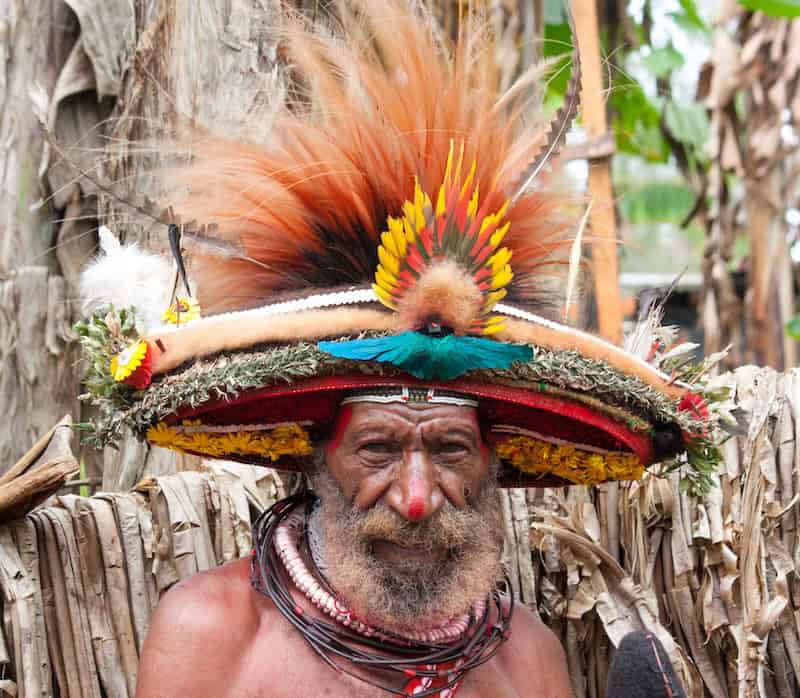
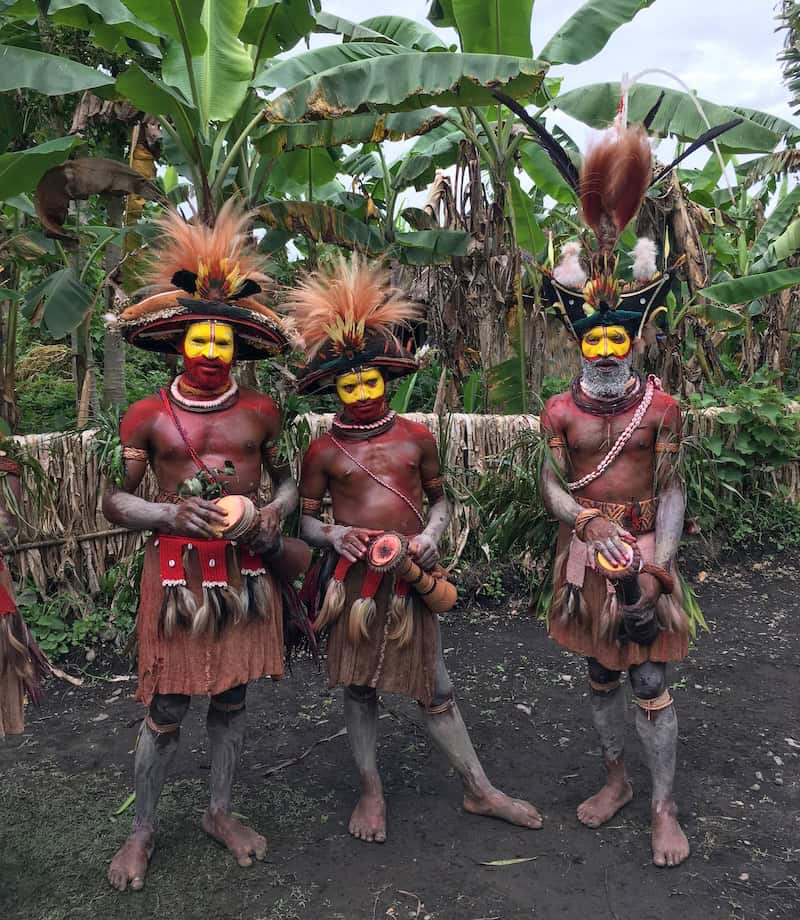
Among the most recognizable Papua New Guinea tribes are the Huli, numbering over 250,000 and residing primarily in Hela Province. According to Huli oral tradition, their ancestry traces to a founding figure named Huli, who they credit with bestowing upon them the fertile lands of the Tari region. Their culture centers on an elaborate coming-of-age tradition that has captivated anthropologists and travelers alike.
Young Huli men between the ages of 15 and 25 enter specialized schools where they learn the intricate process of growing ceremonial wigs from their own hair. For extended periods, often many months, initiates follow strict protocols: they must wet their hair three times daily while singing, sleep on their backs with heads elevated to preserve the wig’s distinctive mushroom shape, and observe dietary restrictions that prohibit consuming pig heart or spicy foods.
The resulting wigs—painstakingly woven by wig masters and adorned with feathers from birds of paradise, yellow ambua clay, and red ochre—serve as far more than decoration. They represent a man’s passage into adulthood, his connection to ancestral traditions, and his status within Huli society. For ceremonial occasions, the wigs become increasingly elaborate, combining two separate pieces and incorporating vibrant face paint that transforms the wearer into a striking embodiment of Huli identity.
The Huli are notable for maintaining highly visible traditional practices into the present day. Unlike many highland groups that have gradually adopted Western customs, the Huli have maintained their traditional practices with remarkable fidelity. Their wig schools continue to operate, though modern education increasingly competes for young men’s attention. Many Huli express deep concern about preserving these traditions for future generations, recognizing that each generation’s participation is essential to cultural continuity.
The Asaro Mudmen: When Legend Becomes Reality
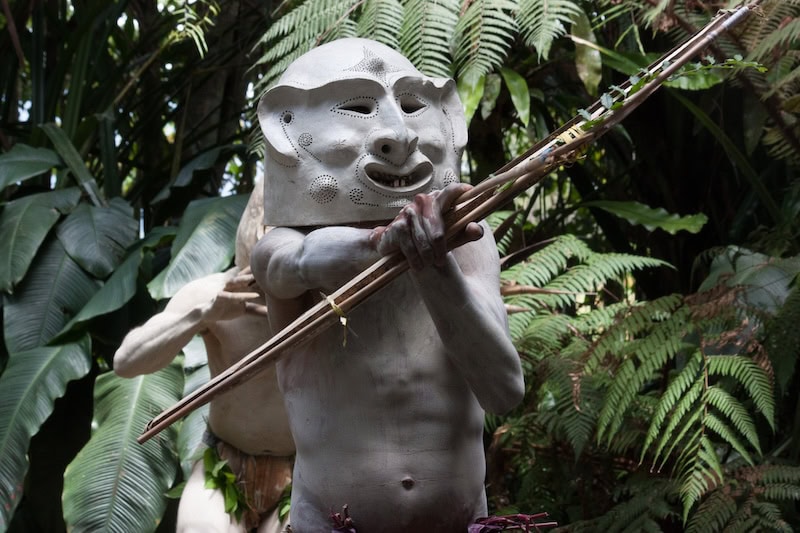
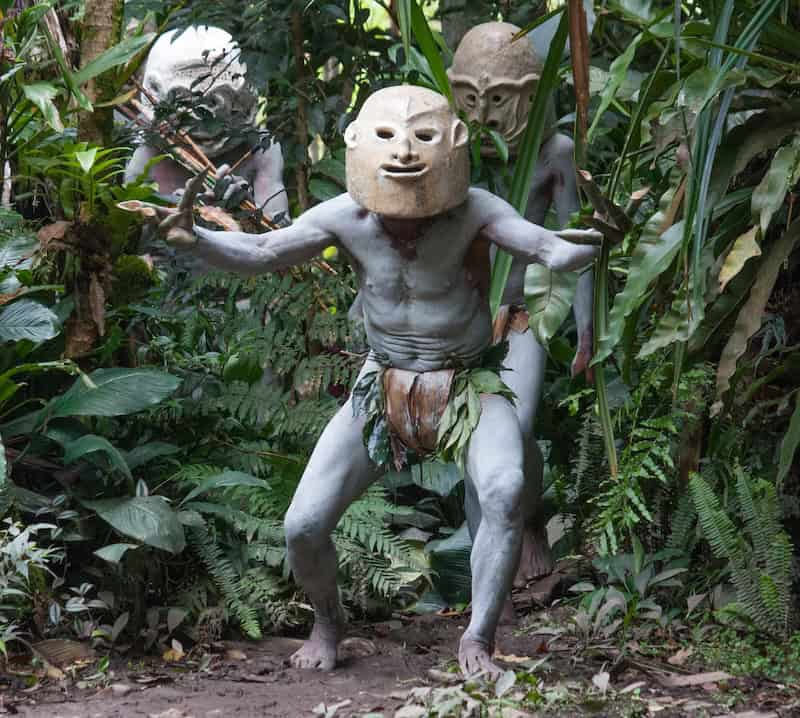
If the Huli represent highland tradition at its most refined, the Asaro Mudmen embody the creative resourcefulness that characterizes Papua New Guineans. Residing near Goroka in the Eastern Highlands Province, the Asaro developed one of the most visually arresting cultural practices in Melanesia.
According to oral histories—of which there are many variations, as is typical in cultures with strong storytelling traditions—the Asaro faced defeat by a rival group and sought refuge along the Asaro River. Emerging from the muddy banks at dusk, their bodies covered in pale clay, they inadvertently terrified their pursuers, who mistook them for ancestral spirits. This story is widely told as the origin of the Mudmen tradition.
Today’s Asaro ceremonies feature elaborate masks crafted from river clay, each one a unique work of sculptural art. The masks feature exaggerated expressions—hollow eyes, distended mouths, protruding features—that evoke the supernatural realm. Performers cover their bodies with the same pale clay, moving with deliberate, otherworldly slowness that enhances the ghostly effect. Long bamboo extensions on their fingers complete the transformation.
Anthropological research suggests that while the Asaro’s cultural practices have ancient roots in the highland tradition of bakime, using natural materials to disguise oneself before raids. Research suggests the contemporary form of the Mudmen costume was formalized during the 1957 Eastern Highlands Agricultural Show. When asked to showcase their culture, community leaders developed the costume into the striking spectacle witnessed today, winning first prize and inadvertently creating one of Papua New Guinea’s most recognizable cultural symbols.
This evolution illustrates an important truth about Papua New Guinea people: their cultures are not static museum pieces but living traditions that adapt and develop. The Asaro’s cultural practices serve multiple purposes simultaneously—maintaining connection to ancestral stories, asserting community identity, and engaging with the wider world through cultural tourism.

The Sing-Sing: Where Diversity Converges
Perhaps nothing better exemplifies the extraordinary diversity of Papua New Guinea people than the sing-sing festivals held throughout the year. These gatherings—particularly the renowned Goroka Show in September and the Mount Hagen Cultural Show in August—bring together dozens of distinct tribal groups, each presenting their unique ceremonial dress, dances, and songs.
The concept of the sing-sing itself emerged from a pragmatic need. In the 1950s, as Papua New Guinea moved toward eventual independence, authorities sought ways to reduce intertribal conflict. The solution was ingenious: create festivals where competitive energy could be channeled into cultural display rather than warfare. Tribes that might once have confronted each other on the battlefield now compete through the beauty and power of their performances.
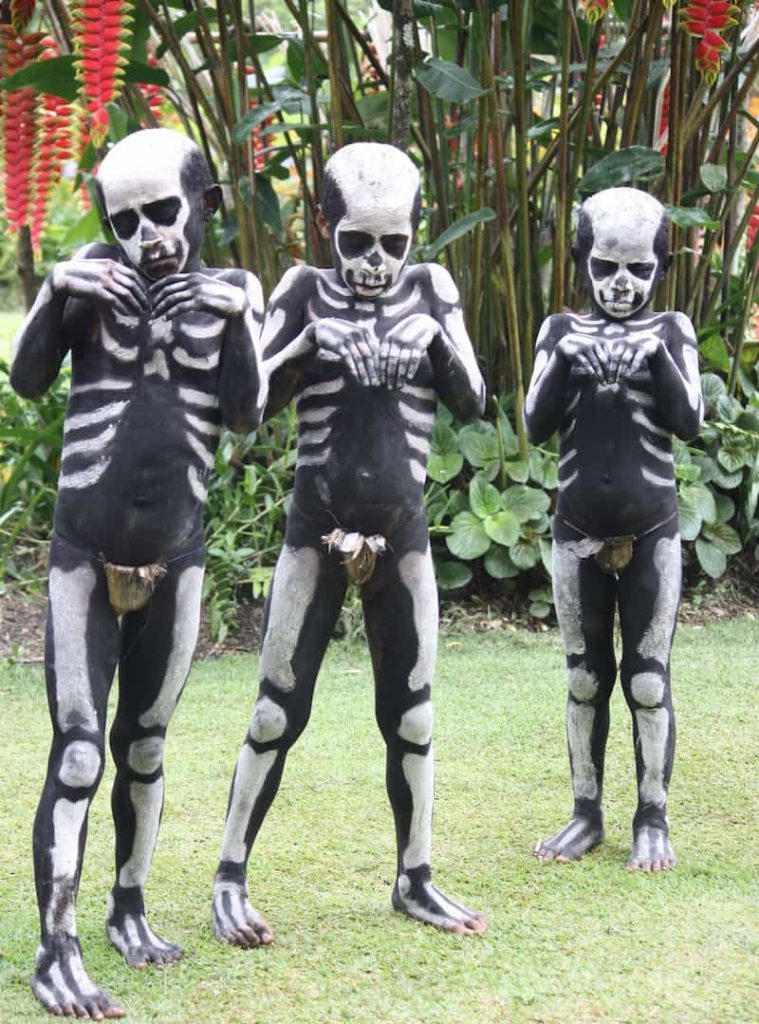
At a contemporary sing-sing, one encounters the full spectrum of Papua New Guinea’s cultural wealth. The Chimbu paint skeletal designs on their bodies, a practice originally intended to intimidate enemies. The Suli Muli people of Enga Province wear headdresses of moss and drum while performing dances named after their distinctive songs. Groups from the Sepik region arrive in elaborate masks representing river spirits and crocodile totems. Each performance draws on traditions passed through many generations, distilled into minutes of pure expression.
What makes these festivals particularly meaningful is their authenticity. Unlike cultural performances staged primarily for tourists, sing-sings serve vital functions within New Guinea society. They provide opportunities for young people to learn traditional practices, for elders to pass on stories and techniques, and for different groups to establish and maintain relationships. The presence of international visitors adds economic value, but it doesn’t define the festivals’ purpose.

Language as Cultural Fingerprint
To understand the New Guinea people is to appreciate the profound relationship between language and culture. The nation’s 820+ local languages, 12% of the world’s linguistic diversity compressed into one of the highest concentrations of linguistic diversity on Earth, represent distinct ways of conceptualizing reality. Each language encodes unique knowledge about local ecosystems, social relationships, spiritual beliefs, and historical experiences.
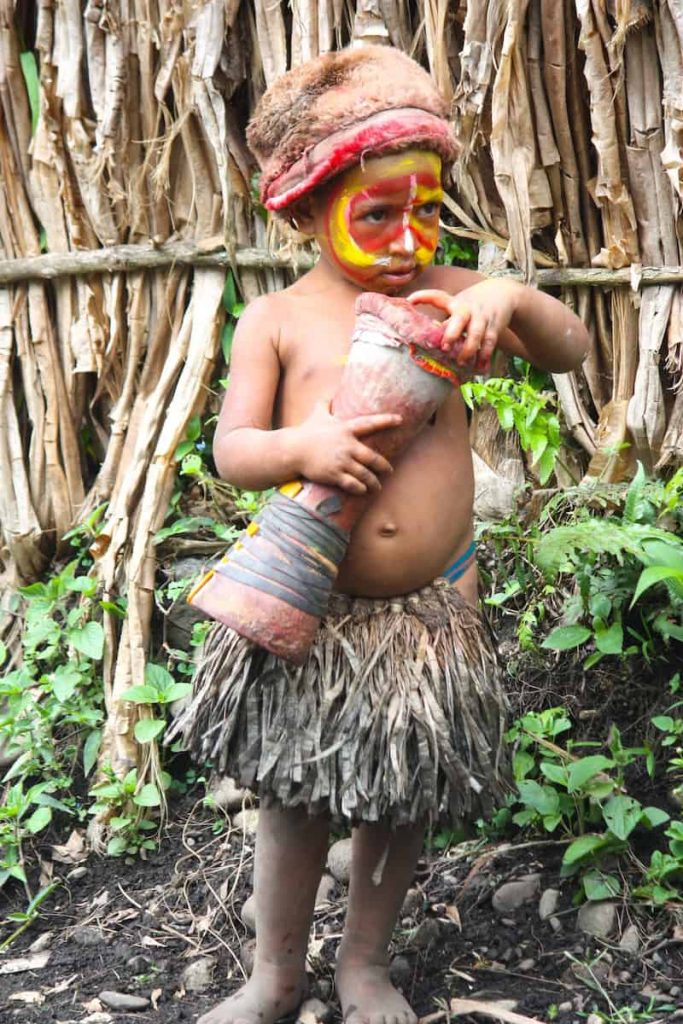
This linguistic diversity also presents practical challenges. Most Papua New Guineans speak multiple languages: their indigenous tongue, often the languages of neighboring groups, and one or more of the nation’s official languages—English, Tok Pisin (a creole that serves as the lingua franca), and Hiri Motu. This multilingualism reflects both the necessity of communication in a fragmented linguistic landscape and the intellectual adaptability that characterizes the PNG people.
Contemporary Challenges and Cultural Resilience
Papua New Guinea people face formidable challenges in the 21st century. Resource extraction projects such as mining, logging, and oil palm plantations encroach on traditional lands, affecting local communities whose livelihoods depend on these territories. Young people migrate to urban centers seeking education and employment, weakening the transmission of cultural knowledge. Climate change affects traditional agricultural practices and threatens low-lying coastal communities.
Yet amid these pressures, Papua New Guinea’s indigenous peoples demonstrate remarkable resilience. Communities are finding innovative ways to maintain traditions while engaging with modern realities. Cultural festivals have become important sources of income and pride. Tourism, when conducted ethically and with community control, provides economic incentives for cultural preservation. Educational initiatives work to document languages and traditions before they disappear.
The Komunive village, home to the original Asaro Mudmen, has successfully defended their cultural ownership in court, establishing important precedents for intellectual property rights. Highland communities increasingly assert their rights to lands threatened by development projects. Young people, far from uniformly abandoning tradition, often express deep pride in their cultural heritage and seek ways to balance modernity with ancestral practices.

Encountering Papua New Guinea Tribes: A Privilege, Not a Right
For travelers considering Papua New Guinea, understanding it’s people requires moving beyond the exotic imagery that often dominates discussions of the country. These are not primitive peoples frozen in time, but sophisticated societies with complex social structures, profound spiritual traditions, and adaptive capabilities honed across millennia.
Authentic encounters with Papua New Guinea’s indigenous communities demand respect, cultural sensitivity, and acknowledgment of historical context. The most meaningful experiences occur through indigenous-led tourism initiatives that ensure communities maintain control over how their cultures are shared and economically benefit from visitor engagement.
Travelers who approach Papua New Guinea with genuine curiosity rather than voyeuristic interest discover something increasingly rare in our interconnected world: the opportunity to witness human cultures that have developed along radically different trajectories from Western societies.
The Huli wigmen’s intricate hair cultivation practices, the Asaro’s transformation into spiritual intermediaries, the multilingual sophistication of ordinary villagers—these represent human possibilities that expand our understanding of what it means to be human.
In Papua New Guinea’s highland valleys and river communities, over 800 distinct groups continue practices that stretch back thousands of years. They maintain languages found nowhere else on Earth, create art that connects the material and spiritual worlds, and preserve ecological knowledge accumulated across countless generations.
For the discerning traveler willing to venture beyond conventional destinations, the New Guinea people offer something invaluable: a window into the extraordinary diversity of human culture and the resilient beauty of traditions maintained against considerable odds.
This is not a destination for those seeking comfortable familiarity or polished tourist experiences. It is, however, an incomparable opportunity to engage with living cultures at a depth and authenticity increasingly difficult to find anywhere on Earth.
The Papua New Guinea people, in all their remarkable diversity, remain among humanity’s most compelling cultural treasures—and meeting them, on their terms and in their territories, constitutes one of contemporary travel’s most profound privileges.